IAM2872 – Founder Helps Shopify Owners Find Hidden Revenue Streams
Special Throwback Episode with Tyler Sullivan

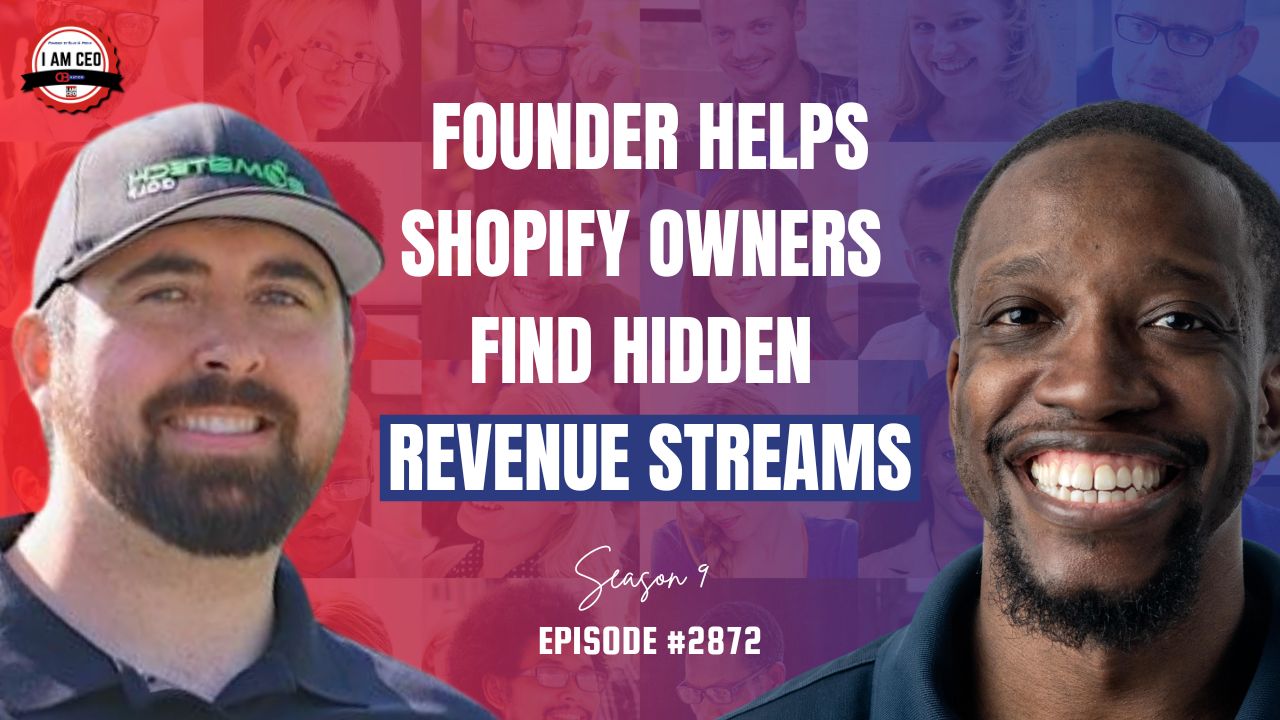
Tyler Sullivani is the founder of BombTech Golf, an e-commerce store with over $15 million sold online since 2012. Tyler also runs EcomGrowers where he and his team have helped countless Shopify owners add 6-7 figures in additional sales to their e-commerce stores by optimizing email systems and ad campaigns to find hidden revenue streams.
Over the years Tyler has come to learn the formula for running successful and profitable eCommerce businesses. He believes that even with online companies there is huge value in having real conversations with customers and potential buyers.
Tyler is hyper-focused on the customer experience and operating a lean business that doesn't just drive revenue but drives serious profit and cash flow.
- CEO Hack: Going to the gym
- CEO Nugget: Be self-aware and open to advice
- CEO Defined: Aligning the right people with the right goals
Website: https://www.bombtechgolf.com/
LinkedIn: https://www.linkedin.com/in/tyler-sullivan-494b5426/
Shopify: https://www.shopify.com/blog/bombtech-golf-personal-messages
https://www.klaviyo.com/customers/case-studies/bombtech
Previous episode: https://iamceo.co/iam505-founder-helps-shopify-owners-find-hidden-revenue-streams/
Hear Gresh's story, learn the 16 business pillars from the podcast, find out about CBNation Architects and why you might be one and so much more. Did we mention it was FREE? Download it today!
Transcription:
Tyler Sullivan 00:00
In there at various stages of their business, especially early on. I can give them the advice that they need to take, but they may not be ready to take. So I would tell myself to first be open to advice, but really I don't know if that person would take it. You know, and that's kind of the thing with business that at least I've learned is that you need to be self aware enough to know that you're not the smartest person and it's okay to learn from someone else. But for me, I just, I don't even think I would take that advice. I don't know if that's a nugget, but it's just being self aware and being open to someone that's done it.
Gresham Harkness 00:59
Hello, hello, hello, this is Gresh from the I Am CEO podcast. I have a very special guest on the show today. I have Tyler Sully Sullivan of Bomb Tech Golf. Tyler, it's awesome to have you on the show.
Tyler Sullivan 01:07
Awesome Beer, no problem.
Gresham Harkness 01:09
Super excited to have you on. And what I want to do is just read a little bit more about Tyler Sully so you can hear a little bit more about all the awesome things that he's doing and Tyler Sullivan. Sullivan Sullivan is the founder of BombTech Golf, an e commerce store with over $15 million sold online since 2012. Tyler also runs Ecom Growers, where he and his team have helped countless Shopify owners add six to seven figures in additional sales to their e commerce stores by optimizing email systems and ad campaigns to find hidden revenue streams. Over the years, Tyler has come to learn the formula for running successful and profitable E commerce businesses. He believes that even with online companies, there's a huge, huge value in having real conversations with customers and and potential buyers. Tyler is hyper focused on the customer experience and operates a lean business that doesn't just drive revenue, but drives serious profit and cash flow. Celia, are you ready to speak to the I Am CEO community?
Tyler Sullivan 01:58
I am. Cash flow. That's, that's the name of the game.
Gresham Harkness 02:00
Let's make it happen. So I wanted to kick everything off and hear a little bit more about your background. What led you to get started with Your business?
Tyler Sullivan 02:06
Yeah. So I was an accidental entrepreneur. I was in sales for about 10 years and really had no intentions of starting an econ brand. And I literally was obsessed with golf, right? Like, no matter what I was doing, I was out there hustling, just trying to plan it as much as I could. And it got to a point where I was trying to compete in world Long drive, which is home run derby of golf. I wasn't that good, but during that process, I ended up breaking seven drivers. Oh, wow. It was like super expensive. I was like, you know, if I'm going to compete, I gotta learn how to assemble my own. So I started assembling my own drivers. I started building some for some buddies. And then I made the world's worst website. This is like 2012. And I sold nothing on it for like, I think five, six months. And this was like before Facebook ads, before Shopify. It was a much different time. But then I remember the, the actual moment that happened, I was on a boat, wasn't a yacht or anything. And I, I had to, you know, I had my iPhone, I got an email and it was my first order ever. And it literally blew my mind. So I was like, wait a sec, I, I'm not actually doing the work right now, but I just got paid, so I'm like, let's do more of that. So through that epiphany, I actually ended up starting bomb tech and ended up working with, you know, a group of college kids at the University of Vermont, where I graduated, barely graduated, partnered with four engineering students for each year, and we designed our own brand of driver, which was, it was a really fun, cool process, definitely took some risk, but they made a design that I thought was worthy and I kind of went all in. I cashed in my 401k to get it made, ended up being a great product. And then that next year was kind of like a slow growth. I was doing well, side hustle in it, still full time job. And then my wife got pregnant and I got fired from my day job.
Gresham Harkness 03:41
Oh no.
Tyler Sullivan 03:42
The week before Thanksgiving, it was just like, the timing was crazy and Bombtown was doing like 15, 20k a month. But with an E commerce business, there's not much cash flow you can pull from that. But that was the kick in the butt I needed. And from there, that next year I started scaling it up. I went from like 100K to, to 450K to 1, 2 million to 4.2 million to 6 million. And now every year, you know, we do between 5 and 6 million depending on product launches. And I have only two employees. And because of that, we had a lot of case studies come out, and we recently, last 12 months, started helping other e Comm brands. So that's been the next step. So it's been. That's E Comm growers. We do email marketing for other e Comm brands like myself. So that's the journey. Man.
Gresham Harkness 04:22
Wow, man. Well, obviously sorry to hear. I too have been laid off. I don't think it was around Thanksgiving, so I do have that. I guess I could be kind a blessing, but I know that's definitely a difficult time where sometimes, you know, you see an opportunity, but it's maybe not the best possible time. But sometimes circumstances just push. Kind of push you towards that.
Tyler Sullivan 04:40
It was the worst timing and the best because you got a kid on the way. You know, it's just. It's what needed to happen. I don't know if that didn't happen, if all this would have just happened or would have just been side hustle forever. You never know. But I'm happy to not be employed by someone else for a long time.
Gresham Harkness 04:57
Yeah, that sounds awesome. And I know that obviously you've been able to build your brand and then build your company, but then you're also helping out so many others. So could you take me through both of those aspects? Tell us what we can find on BombTech Golf and then also Ecom Growers.
Tyler Sullivan 05:10
Yeah. So BombTech has been. It's gone through so many iterations, but right now I have it pretty well optimized to a point where I only have to work four to six hours a week on it. And I could work less if I want. I took myself completely out of the business with that brand, which allowed me to start another brand, another business. And really, like. So I have all these epiphanies that were kind of situational in my own life that if they don't happen to you, you may never see it in this light. So I was. Having had my first kid, I was working like 20 hours a day, seven days a week, hustling to get bond tech to grow. I was doing all the wrong stuff, spinning my wheels, didn't have clear direction on what moved the needle. And then I figured out, okay, I had my second kid coming. This was now this is like three years ago, two and a half years ago. And I was like, you know what? I'm gonna take six weeks off before she's born. I'm gonna take six weeks off straight up and see if I Can do it. So I took six weeks off and our sales, what do you think happened? They went up or down when I
Gresham Harkness 06:02
was going, I want to say up, but I think you're gonna tell me down.
Tyler Sullivan 06:05
No, they went up. They went up. Okay. So that was my aha moment, my second aha or third aha moment where I was like, you know what, I'm in the office, you know, in a traditional sense. I was working a lot, grinding mo, you know, moving all these like buttons on the website, editing the copy, just doing all these things that made me feel busy. And then I took the six weeks off, said, you know, what, what, what am I doing? You know, and then after having the second kid and realize that I can step away from the business and only work on like real high value things. I have my experts in place. So I've got an ad guy who runs my ads. I got an email guy because now my partner and the other business runs all email. I got three people that does all the fulfillment so I don't touch or see products. And then I have two customer service guys, which is my in house guys. That's the whole team and that's, you know, we can do, we could scale the beauty of that business. We could scale up and do 800k in a month, which we did this summer, 8 or 50k. And my time didn't change. So I'm very happy, thankful that I've been able to build that business. And that was really built on a couple of things. Hitting things early. Like I hit Facebook live earlier, hit Facebook video early. I put myself on video on days that I didn't want to be on video. I was not having a good day. But I just solely built a personal brand alongside that which accidentally allowed me, my customers to relate to me which helped increase our brand recognition. And then we just, all we did with that is I took those conversations on social. I just moved them into our biggest revenue channel which is email. So I take, I took like asking questions about how far to hit this club. What driver do you want next? Just the conversational aspects of what we do on social. And I took that to email and that allowed us to be, I would consider a real brand and more safe if like paid traffic gets more expensive, which it is. Our email list is so engaged that we can, we can exist now because we're having conversations at scale. So now that we've learned to do that, we had actually tidy how I launched other business. Clayvior did a case study on us on Bob Tech about Two years ago, and people kept hitting me up like, hey, can you help me? Can you help my E Comm brand? I was like, no. I was like, I was like, no, I can't help you. Then Chris, who is my first employee who runs all my email. And we were crushing it because Clay goes right up us, like, how are you doing 50% of your revenue email and it varies. And he's like, do you mind if I do a side host? I was like, all right, cool. Do it. You go, go ahead. Good luck. And he went out and closed three clients. And I said, why don't we partner up? And so now what I do is it's really. That business has been great. We've scaled that up. We're almost at almost six figures a month with that, with retainers. But it's really better, more important, what the outcome is. I mean, we're working brands like my own and we're driving serious revenue and profit that allows their return on ad spend to be lower or higher, excuse me, their CPA to be lower and allows them to scale more. So it has a real impact as a whole. Reason why I used to say no. And now we've got a very specific offer and only one thing that we do when that's you. So. So that business has been really fun to grow and it's a little different than E Comm. It's service based. So it's, you know, you need people. So I'm learning that business and we're growing and we're, you know, we're trying to scale that up. But I got two companies and I've, I'm working more on the agency in terms of like figuring out things to scale and then I'm going to build out a system, hopefully hired to replace myself like I did with bomb tech. So, yeah, that's it.
Gresham Harkness 09:09
Nice. I definitely appreciate that. And I think a lot of times, you know, when you. I always, I believe at least the true definition of scale is to be able to, to not have to work more to generate more revenue because you have the systems and everything in place that you can just kind of, you know, fix it and forget it to some degree and just. It'll continue to kind of go how
Tyler Sullivan 09:26
you needed to go. Exactly. That's the dream.
Gresham Harkness 09:28
Nice. So I wanted to ask you, and this could be for you personally or for your businesses, but I want to ask you for what I call your secret sauce. And it's good. It is your thing that you feel kind of sets you apart and makes you unique.
Tyler Sullivan 09:38
I think my skill set now is that I could see what moves the needle and what doesn't. You know, that's the biggest thing, like my, my personal thing that I like bring to the table is that like in our own business right now for like the agency, we're trying to grow in, we whiteboard out like all the stuff we want to do, all the crap we're doing day to day. And we either try to automate it or we try first delete it. Can we get rid of it? We either try to automate it next, we can't delete it, or we try to hire some or delegate it. So really just taking that mindset. So first like my whole process now I just, just wrote this down. There it is. I fio, which is figured out. Then I build a system. So for once I figure set up and I know it's worth doing. I build a system that's good enough, I can then hire someone and have them do it and then scale. So that's really what the hardest part is. The first part, figure it out and. But if you can do that. And then I think this is where a lot of people, especially in the agency e comm world, they do this, figure it out. And they actually do figure it out. But then they never systematize in handoff and they just, they feel busy, they're grinding, they're working a ton and they may be doing well, but it's just like once you've had that freedom or like for me it's my epiphany with my two kids. You know, once I said hey, I'm gonna take that time off. And I really, that was such a clear indication I did not work at all. And sales went up. Therefore I'm not that important. It's just that stuff. So I built a system and it's kind of crazy to think about. Cause I worked so many hours, so long on stuff that didn't matter to finally figure that out. And it was really the kids and the life events that's. That made me have those moments where I was like whoa. Because if I was single and didn't have those moments where didn't get fired, I could probably just be working 100 hours a week and probably doing less revenue. Cause I'm not actually working on high impact stuff, but feeling busy, you know what I mean? So that's part of my biggest skill. And then also with that it's like running lean. Like we, we are so profitable on both brands because I just, I could tell with what Stuff is not, not working and we just don't want excess overhead because I, I've been there where we had a big office, more employees. It's like unless they drive revenue or they actually help have a better customer experience, if they don't answer those two things, we don't need it. So that's been cool to see. I just get sometimes impatient with figuring it out.
Gresham Harkness 11:46
Yeah.
Tyler Sullivan 11:46
A lot of good things going faster but it's like that's the magic is if you can figure it out and do it and replicate.
Gresham Harkness 11:52
I appreciate that. So I wanted to switch gears a little bit and I wanted to ask you for what I call a CEO hack. So this could be an Apple book or a habit that you have. But what's something that makes you most effective and efficient?
Tyler Sullivan 12:03
Really been going to the gym. I hurt my back like two years ago and it really took such a toll on me. So like no matter what I go to the gym and I, I used to lift heavy weights all the time. Now I switch all the cardio. I'm hanging out 45 minutes every day and that, that alone. And then like this sounds crazy too but I do spend my mornings with the kids. Get em up, get em ready. I hang out with them, have breakfast and just doing that like gets me ready for the day. Gets them ready for the day. But also it makes me feel accomplished as a dad and feel like I did something important and then my, my head is clear to like to do work.
Gresham Harkness 12:36
Nice. And so now I wanted to ask you for what I call a CEO nugget. And this is a word of wisdom or a piece of advice or if you can hop into a time machine. What would you tell your younger business self?
Tyler Sullivan 12:45
I would, I don't know if anything I would say to a younger business self would even make sense because it's one of those things where like not necessarily our clients where I talk a lot of E Comm owners and stuff. Yeah. And they're at various stages of their business, especially early on. I can give them the advice that they need to take, but they may not be ready to take. So I would tell myself to first be open to advice but really I don't know if that person would take it. You know and that's kind of the thing with business that at least I've learned is that you need to be self aware enough to know that you're not the smartest person and it's okay to learn from someone else. But for me I just, I don't even think I would take that advice. I hope that's a nugget, but it's just being self aware and being open to someone that's done it. If they're telling you to do it and not and get out of your own way. So water ego gets involved with it especially. I have to do that. So I have to do that. Actually you don't. Right?
Gresham Harkness 13:34
Exactly.
Tyler Sullivan 13:34
Yeah.
Gresham Harkness 13:35
You gotta be aware of everything that's happening. So I appreciate those nuggets. And now I wanted to ask you my absolute favorite question, which is the definition of what it means to be a CEO. And we're hoping to have different quote unquote CEOs on this show. So Sully, what does being a CEO mean to you?
Tyler Sullivan 13:47
What does a CEO? I don't really think of myself as a CEO to be honest, but I would think the ability to put the right people in the right places and have a overall mission or goal for the team to align with. So just aligning the right people with the right goal.
Gresham Harkness 14:04
Definitely appreciate that perspective and I appreciate your time even more. What I wanted to do is pass you to the mic, so to speak, just to see if there's anything additional you want to let our readers and listeners know and then of course, how best they can get a hold of you and find out about all the awesome things you guys are working on.
Tyler Sullivan 14:16
Yeah, yeah, no, I appreciate the time. Hopefully I brought some value. I mean our expertise is we help Shopify and BigCommerce and WooCommerce stores profit more. Email, that's Ecom growers.com you could fill out a form, schedule a call with Chris. We'll just talk to you about your brand, see if you're a good fit. But that's, that's another thing like in terms of what we talk about with like what to focus on or not, it's like fundamentals really are the key. And I see, I think one of the big struggles I had is so much so many shiny balls, so many apps, so many hacks, so many tricks. And I think if you could focus on your fundamentals, which is traffic, email, offer and then a good team, that really is a bigger opportunity, you know, and that's that stuff is harder to focus on because it's not as fun and shiny and it's not that big hack or trick. And that's the reason that we offer email is because we know the fundamentals and it's just something that is so overlooked and it has such a big impact. So that's why I'm excited about Ecom Growers and helping other brands with that. And you guys should check me out@bondsetgolf.com if you guys are golfers. First one check out the website, see what I'm doing there from E. Comm angle but they can also email me direct sullycom growers.com guys have questions, want to talk E. Comm feel free to hit me up. Talk to them.
Gresham Harkness 15:27
Awesome. Awesome awesome. Well thank you so much. We'll have those links and information in the show notes. And thank you for reminders as well too, because a lot of times we do gloss over the fundamentals, those small things that actually have a huge impact, that aren't as sexy, aren't as popular a lot of times, but but are very, very necessary to be successful. So I definitely appreciate that reminder and hope you have a phenomenal rest of the day.