IAM2843 – Consultant and Podcaster Advises the Government on Minimum Wage
Special Throwback Episode with Simon Sapper

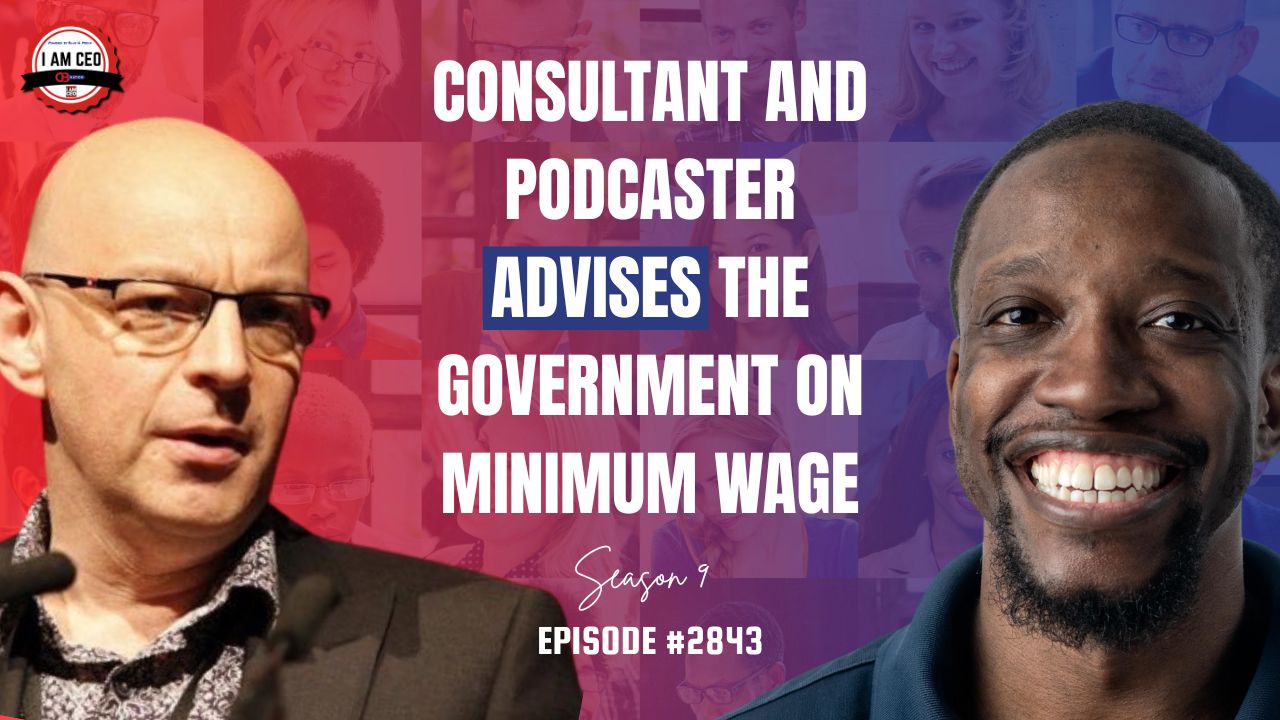
Simon worked for 30 years in employee relations but in 2016 decided to set up his own consultancy, Makes You Think. He is based in London, UK, and in the past has acted as an adviser to the British government and the European Union. He is currently also a member of the Low Pay Commission, advising the government on minimum wage issues, and has written regularly for a number of newspapers, magazines, and websites. He has been podcasting for 10 years.
- CEO Hack: Down-times for work-life balance
- CEO Nugget: (1) Always have your mind open for opportunities (2) Be honest
- CEO Defined: Freedom and responsibility
Website: https://www.makes-you-think.com/
LinkedIn: linkedin.com/in/simonsapper
Twitter: https://twitter.com/simonsapper
Previous episode: https://iamceo.co/iam488-consultant-and-podcaster-advises-the-government-on-minimum-wage/
Hear Gresh's story, learn the 16 business pillars from the podcast, find out about CBNation Architects and why you might be one and so much more. Did we mention it was FREE? Download it today!
Transcription:
Simon Sapper 00:00
Be honest. Be really, really honest with yourself. And it's one, it's one thing to have a lot of enthusiasm, especially when you're younger, when you're starting out, and to kind of promise all sorts of everything, you know, but, but if you promise things you can't deliver and you know you can't deliver, that's really. Well, it's not a smart move. It's not a smart move because you feel bad you're letting down a client. It doesn't leave your brand reputation in any good. So be really, really honest.
Gresham Harkless 00:54
Hello, hello, hello, this is Gresh from the I Am CEO podcast and I have a very special guest on the show today as Simon Sapper of Make sure you think. Simon, it's awesome to have you on the show.
Simon Sapper 01:02
It's great to be here, Gresham. Thanks very much for the invitation.
Gresham Harkless 01:05
No problem. The pleasure is definitely all mine. And what I wanted to do is just read a little bit more about Simon so you can hear about all the awesome things that he's doing and Simon worked for 30 years in employee relations, but in 2016 decided to set up his own consultancy.
Simon Sapper 01:16
Makes you think.
Gresham Harkless 01:17
He is based in London, UK and in the past has acted as an advisor to the British government and the European Union. He is currently also a member of the Low Pay Commission advising the government on minimum wage issues and has written regularly for a number of newspapers, magazines and websites. He has been podcasting for over 10 years. Simon, are you ready to speak to the I Am CEO community?
Simon Sapper 01:37
I'm looking forward to it.
Gresham Harkless 01:39
Awesome. Let's do it. So to kick everything off, I wanted to hear a little bit more about your CEO story. What led you to get started with your business, your podcast and all the awesome things you're working on?
Simon Sapper 01:46
Well, as you can probably tell from my bio, my mission is to help organizations, especially membership based organizations who work better. So that's a lot of kind of third sector, not for profit campaigning groups, from labor organizations to sports and community clubs. And instead of doing this for other people in 2016, I decided I wanted to try and do it for myself. So the way I work is I look to increase the capacity and Improve the leverage of the organizations I work with. And I do this in two ways. First, I look at their governance, their structure, how decisions are made, how they service, their membership. And then second, I make messages clearer. And that's where the podcasting stuff comes in, because podcasts are not really used that widely in some sections of the UK economy. And I can bring my expertise to bear to help people get their internal and external messages out more effectively. And as a result of all that, I kind of get asked for a view on a range of work related issues, as you might expect.
Gresham Harkless 02:37
Nice. That makes so much sense. And I think that, and I don't know if you find this, you know, when you're working with these, these organizations, do you find like sometimes when they're working, I guess in the business, in the business or in the organization, and it becomes a little bit harder to kind of identify lack of sometimes simplicity and messaging and things like that, because they're so close in and they're doing it on a regular, everyday basis. So a lot of times they need that kind of third party perspective so that they can see those gaps or opportunities or option or options for clarity as well.
Simon Sapper 03:05
Absolutely right. Absolutely right. Gresh. I mean, I don't know if you have this phrase in the US but in the UK we say you sometimes you can't see the wood for the trees. You're surrounded, you know. And I do find it's not a surprise, is it, that actually the organizations you can most, most you can work most effectively with, where you can make the biggest difference with, are those organizations who for various reasons, all good reasons, that can't get a sense of perspective. And there's an outsider who's got knowledge and experience and skills. You can come in and say, ooh, hang on a minute, take a step back and be talking about doing things a different way.
Gresham Harkless 03:34
Exactly, yeah. And it makes so much sense. And I think that, you know, and I think Steve Jobs even has this quote where he says about, I think, design or complexity, where a lot of times to get things to be simple, you really have to work harder. And it's kind of counterintuitive because a lot of times you think, yeah, the first you do it simple, but really you have to work to get to simplicity and clarity.
Simon Sapper 03:51
Absolutely, absolutely.
Gresham Harkless 03:53
Nice. And I know you touched on it a little bit. I wanted to hear a little bit more on how you work with your clients. Could you take us through exactly, like how that happens from the beginning until
Simon Sapper 04:00
you start working together? Well, I've got two golden rules about this. The first is that you have to go to where people are, not where you want them to be. Got to start off with where they're at rather than where you think they should be or you want, you want them to get to. That's the thing. First thing. And the second thing is to remember it's not about you. You're the catalyst, you're not the, you're not the beneficiary in that sense. You're not, you know, you must keep a clear sense of perspective to recognize that it's not about your ego or your sense of satisfaction. It's they're the client, they're the people that you're being paid to do it and to do a job for. So there. So it's a three step process. I want to meet with the client, I want to listen to what they've got to say and I want to work out with them what, what deliverables are possible. And of course when you're talking about what deliverables are possible, it's a combination of what they want and what you know, you can provide. And sometimes that's dead easy. Sometimes it's just a phone call or a quick chat. Other times you need to meet two or three or even more occasions to get a real understanding and build up a kind of rapport that produces the confidence people to hire me, I guess.
Gresham Harkless 04:57
Yeah, that makes so much sense. And I love especially the fact when you talk about and I used to say I think it's seven habits of highly effective people. I talk about it a lot, kind of beginning with the end of mind. And I think that a lot of times we forget that where you're kind of reverse engineering, you figure out where you want to be, then you work backwards from there. But then you know, I especially me being like especially the marketing world as well so often we hear and see these really awesome things. Oh I really like that meme or that gif or that's a really cool social media site and all these things. But we often forget the people that we're trying to actually serve. And just as you kind of spoke to on that second point that you get clarity on is that we're the conduit where how people are, you know, having, you know, great experience. A lot of times we forget that that person that we're actually doing everything for.
Simon Sapper 05:38
Absolutely. And of course sometimes you don't see the full situation at first glance. You sometimes as you get to know the client better, the real issues, the real problems, the real Barriers only become visible then. So of course you've got to take it a step at a time. Yeah. You can have an overall goal in mind. You must have the end in mind. You can't rush to get there, not least because your work might take you down a different track to the one that you're expecting to follow.
Gresham Harkless 06:02
Yeah, absolutely. And then kind of going back to what we were talking about, just you have to work out just as far as messaging, but also understanding exactly what those pain points are, how you can solve those. A lot of times it doesn't happen on that first, you know, question that you ask. If you ask somebody what's your pain points, they'll say, oh, well, it's, it's my knee and it may not even be their knee. It may be something completely different. So you have to share those follow up questions.
Simon Sapper 06:21
Absolutely. And you've got to keep an open mind as well. Of course.
Gresham Harkless 06:23
Exactly. Exactly. So now I wanted to ask you, you might have already touched on this, but what I call your secret sauce, and it's for you personally or for your organization podcast, but what do you feel kind of sets you apart and makes you unique?
Simon Sapper 06:33
Well, it's because I'm good. I'm sorry to be that broken about it, but, you know, I wouldn't have survived 30 years in this field unless I didn't know what I was doing and unless I learned from my experiences and the setbacks as well as the successes. But immodesty apart, I think it's because over that period of time, I've worked in the private sector, I've worked in the public sector, I've worked in the voluntary sector, I've worked across a range of industries. I've worked at local level, national level, international level. I've kind of built up, you know, a lot of experience, you know, a very, a very well populated database about things that work, things that don't work, what the nuances are. Different situations, different employment relation situations. Yeah, I kind of, I kind of warn a teacher, I've eaten the pie, I've walked the walk and I, you know, I. You never stop learning. I never stop learning. So even though, you know, I've got a, I've got a backstory that's helpful for me to do a good job for my current and future clients. Each person I work with, I always take away something new and I, you know, I simulate the new learning into the stuff I've got already.
Gresham Harkless 07:37
Nice. I definitely appreciate that. And definitely, you know what I'm hearing incorrect me If I'm wrong, but it sounds like, I think so many times we're looking for that, I guess, that magic bullet, so to speak, on what makes you, what makes you the same. A lot of times you cannot replace the overall experience that somebody has and you having so much experience and be able to, as you say, you know, have that experience from so many different aspects with so many different clients. I think there's, there's something to be said about being good from just having put in the work and put in the time and kind of chopped at the tree over and over and over again so that you have that expertise and you sit down with the client that you're able to know because you've been in the field and worked with clients on so many different levels for so long.
Simon Sapper 08:15
Well, that's true, but each, each situation has its unique chemistry. And of course, you know, you're not. You're never going to get on with everyone you meet or everyone you. You're trying to strike up a business relationship with. You have to recognize that, of course. But there is a unique chemistry that applies to each situation. And, you know, I hope that you have to. You have to make yourself easy and available to work with. That's part of it, isn't it? It goes back to what we were talking about, about saying it's not all about you. You're the conduit. You've got to be an effective accessor, accessible conduit. And by the way, I've got to tell, I'm sure some of your listeners will appreciate this. You've no idea how difficult it is for a Brit to come onto a show like yours and say, well, it's because I'm good. That's so counterintuitive to us.
Gresham Harkless 08:56
No, I mean, but facts are always facts. I mean, and again, I say, like, it's like Malcolm Gladwell's like, 10,000 hours. A lot of times when people reach a level of mastery and success, you think that they wake up and it happened. But it's happened over years. It didn't happen when you first started. So I don't definitely take it that way. And I'm sure there's a lot of other people who are listening to this podcast as well that would answer the question exactly as you would. So I definitely, I'm not allowed to. I definitely appreciate that. So I wanted to switch gears a little bit and I wanted to ask you for what I call a CEO hack. So this could be an app, a book, or a habit that you have, but what's something that makes you more effective and efficient?
Simon Sapper 09:28
Well, I think the thing that I hold very dear to my heart is to have an effective work life balance. So that's the thing, as it were. So I schedule kind of downtime as rigorously and as strictly as I schedule business appointments, because otherwise it just gets squeezed out of my diary and I find that I'm not as effective if I don't have that work by balance. Now I know that work by fountains are luxury for some people, for many people, but if you can at all do it, I would, I would strongly recommend, recommend it. It certainly works for me. And I think there's a kind of personal story to this in the sense that my, my father, his work was his life. So when he stopped working, it's kind of, you know, there wasn't anything to counterbalance it. And he was, you know, he's, he was depressed in his later years. And I thought, you know, I don't want to be like now.
Gresham Harkless 10:14
I wanted to ask you for what I call a CEO nugget. And this is a word of wisdom or piece of advice or if you could happen to a time machine, what would you tell your younger business self?
Simon Sapper 10:21
Okay, I've got two nuggets I think that come to mind immediately. The first is the, the first is a variation on a quote from Pasteur. Pasteur, he said, said that blue Pasteur, sort of scientists from the 1800s. He, he said chance visits the prepared mind. But I prefer to think of it as opportunity visits the prepared mind. You should always have your mind open to see what opportunities or possibilities are just around the corner or may just step out, step out in front of you. Don't close your mind just because things are different, unusual or strange or unknown. That's the first thing. Opportunity visits the prepared mind. Be prepared. And the second thing is be honest. Be really, really honest with yourself. It's one thing to have a lot of enthusiasm, especially when you're younger, when you're starting out and to, to kind of promise all sorts of everything, you know, but, but if you promise things you can't deliver and you know you can't deliver, that's really. Well, it's not a smart move. It's not a smart move because you feel bad you're letting down a client. It doesn't leave your brand reputation in any good. So be really, really honest. And sometimes, sometimes people need help from other people to, to get to that level of honesty. But, but don't kid yourself. Don't deceive yourself because, because you'll be the one who loses that most of the possible.
Gresham Harkless 11:33
Absolutely. No, I absolutely love that quote. You know, opportunity visits, prepare mind. Because a lot of times, especially like when you, I think when you, I guess sometimes accept that entrepreneurial dream as a lot of us have, or you start to see and you work in a business, you start to see the opportunities everywhere. But just as you said, it doesn't just come, it comes because you prepared your mind because it's through an action or repeated action, or you start to see those things because you start thinking towards that. And I definitely would agree with you, you know, honestly is definitely in this day and age, especially because there's so much accessibility to people and organizations and businesses, a lot of times you, you don't have to be honest, I guess you can say. But if you're not honest, sometimes you'll get found out, whether that be, you know, and putting together whatever you said you're going to do and didn't fulfill or insane or something and somebody finds something that's not in alignment. So I think it's, you know, that's why, you know, the authenticity and brand, personal brand especially, is becoming such a big thing because we have so much accessibility with this technology.
Simon Sapper 12:24
I think you're right. I mean, it's much, much better to under promise and over deliver. Over promised land, to deliver.
Gresham Harkless 12:29
Absolutely, absolutely. So now I wanted to ask you my absolute favorite question, which is the definition of what it means to be a CEO. And we're hoping to have different quote unquote CEOs on the show. So, Simon, what does being a CEO means?
Simon Sapper 12:39
Well, for me it's, it's that it, everything starts and stops with me. Right? It's not, I mean, I don't mean that, you know, I don't mean that I'm all powerful or whatever. What I mean is if you're, if you're, if you're working for someone else, then you contribute to something or you're, will you receive or process something. But actually if I've got a business idea or an idea for a new podcast series or a new approach to help a client, I have the idea, I have to build it up, I have to, I have to discuss it and develop it, sell it, and I get the consequences of that, whether it's good or bad, you know, that's of secondary importance. It begins in if you're, if you're, if you're the designer, if you're a business person, you'll be entrepreneur. It begins and end with you. And that sense of, of having the complete cycle, a sort of holistic view on activity, is something that I'm really enjoying, especially having been in an employee situation for so long. I'm really enjoying that sort of freedom and responsibility. And, you know, I'm hoping very much that will continue. I'm expecting it will.
Gresham Harkless 13:35
Nice. Well, I definitely appreciate that perspective, just because, just as you said, a lot of times, if we see like something's not being done as well as it could be, or there's not a podcast created or there's not a blog or there's this app that needs to be created where we can create that and it begins kind of like that. You said you can actually create that and build that and grow that. And as you said, it's an incredible responsibility and incredible kind of step for people to take. But you're able to do that and you have the power to do that. So I think that is an awesome definition and I appreciate that and I appreciate your time even more, Simon. What I want to do is pass you to the mic, so to speak, just to see if there's anything additional you can let our readers and listeners know and then, of course, how best they can get overviews. Subscribe to the podcast, find out all the awesome things you guys are working on.
Simon Sapper 14:14
Well, well, Gretan, thank you very much, as I say, for inviting me to, to, to join you, especially from, from such a, such a long distance away from, you know, from, from, from where we are at the moment. As I look out of my, as I look out of my, my window at the moment, I can see. I can see it's a, it's a gray day, it's raining. It looks really miserable. But I would go back to that saying that opportunity visits the prepared mind. If you can. If you can keep an OMA line and look, look at the world around you and you think, you, you think, actually that's not quite right. I could do that better. There's a gap in the market. Don't be put off. Don't be put off. Give it a go if you can, because unless you try, you're never, you're never going to know. And I realize I'm very lucky in the sense that I have a degree of security and, and I have flexibility and choices that not everyone else has. But I'm sure there are an awful lot of people who do have that choice, but perhaps don't exercise it. And it would be a shame if, you know, you got to the end of your, you know, you've gone into your old age and you look back and you had regrets and thought, oh, shove from that. Don't have regrets.
Gresham Harkless 15:11
Don't have regrets.
Simon Sapper 15:12
You know, life's life's too short. If you, if you've got an idea, try and pursue it. And if you want to, if your listeners would like to talk to me or get hold of me, then they're very welcome to drop me a line. My email address is Simonakes. Com Simon@makes you think.com and I'd be very happy to pick up any of the themes that we've spoken about over the last 15 minutes or so. Or even if people are interested in perhaps talking about possibility of us working together to solve some issue or address some problem in the work or the workplace, be only too happy to start those discussions.
Gresham Harkless 15:46
Awesome. Awesome, awesome. Well, thank you so much again Simon. We will have those links and information in the show notes. And just as you said, a lot of times if you prepare your mind, you'll see the opportunity may not look the same as Simon, may not look the same as me, but a lot of times we have more things at our disposal then sometimes we will give ourselves credit for. So even if it doesn't look like, you know, your podcast or it doesn't look like my podcast, if you have an idea to start a podcast or start a business, start a vlog, whatever it is, you might be able to do an entirely different way. But you can still, you know, take those steps because you have that prepared mind and you're prepared for the opportunity that you'll see. So thank you so much again Simon. I truly appreciate you again and I hope you have a phenomenal rest of the day.