IAM2880 – Founder and Entrepreneur Training and Certifying the Next Generation of Cybersecurity Professionals
Podcast Interview with Kessington Ekhaiyeme

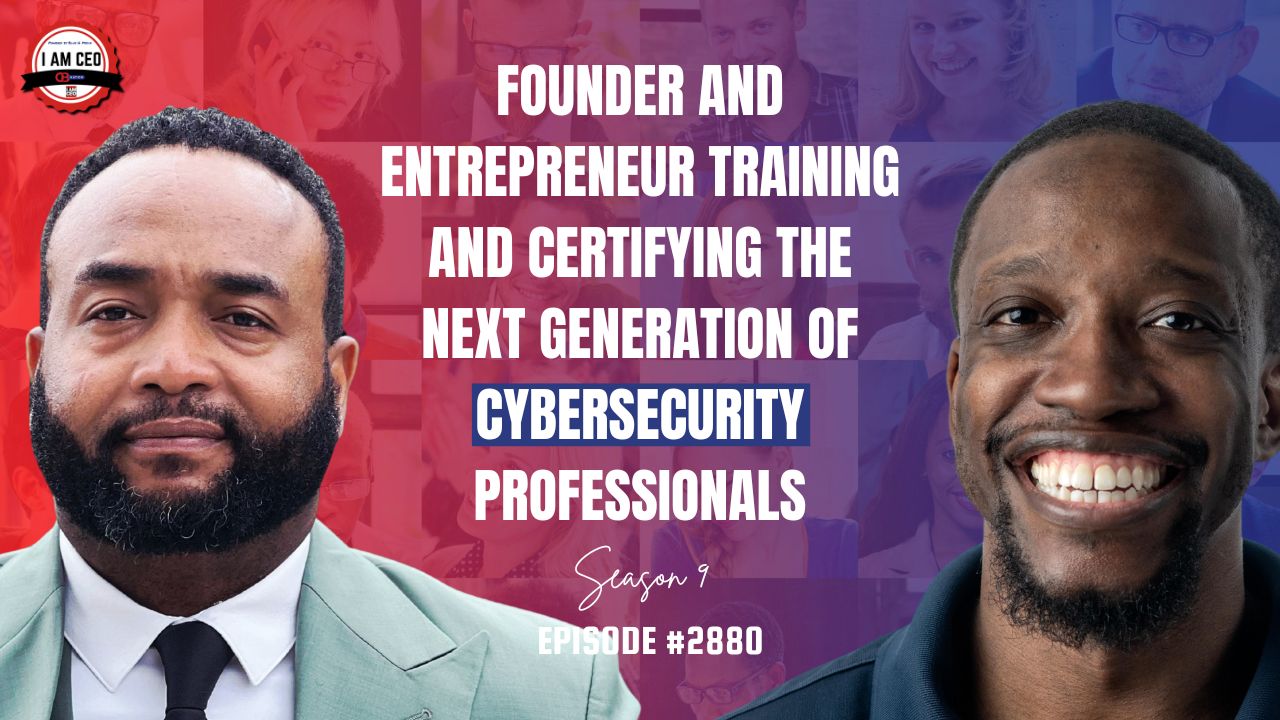
In this episode, Gresham Harkless welcomes Kessington Ekhaiyeme, Founder and CEO of Kinema Cybersecurity. Kessington launched the firm to make cybersecurity accessible, practical, and real, specifically targeting immigrants, career changers, and small or immigrant-owned businesses looking for enterprise-grade protection without the enterprise price tag.
Kessington shares that his business stands out because it rejects textbook theory and focuses on live, hands-on experience. By leaning into the human-centric side of Governance, Risk, and Compliance (GRC), he trains professionals to transition into the field without needing to program or code.
Kessington credits his “secret sauce” to his philosophy of breaking down and simplifying the complex into manageable chunks. His key takeaway is to stop waiting for perfection, which he notes is the enemy of momentum. He defines a CEO as a vision-carrying servant leader down in the trenches who builds systems designed to outlive them.
Website: https://kenimacybersecurity.com/
Check out our CEO Hack Buzz Newsletter–our premium newsletter with hacks and nuggets to level up your organization. Sign up HERE.
I AM CEO Handbook Volume 3 is HERE and it's FREE. Get your copy here: http://cbnation.co/iamceo3. Get the 100+ things that you can learn from 1600 business podcasts we recorded.
Hear Gresh's story, learn the 16 business pillars from the podcast, find out about CBNation Architects and why you might be one and so much more. Did we mention it was FREE? Download it today!
Full Podcast Interview:
Full Audio Transcription:
Kessington Ekhaiyeme 00:00
I always say don't wait to be perfect in anything you do before you start. Perfection is the enemy of momentum. That's what I, I like. That's the way I like to put it. So if you're waiting for things to be perfect, you might never start because nothing is perfect in this life, right? So start with what you have, refine as you grow, and let your consistency show.
Gresham Harkless 00:53
hello, hello, hello, this is Gretch from the I Am CEO Podcast and I have an awesome guest on the show today. F. Kesington Ake Yeme Kensington, Excited to have you on the show.
Kessington Ekhaiyeme 01:02
Thank you so much for having me. I'm glad to be here.
Gresham Harkless 01:05
Yes, I'm super excited to have you on and talk about all the awesome things that you're doing. And of course before we do that, I want to read a little bit more about Kensington so you hear about some of those awesome things and Kensington is the founder and CEO of Kinema Cybersecurity, a company built on simple but a powerful mission to make cybersecurity security accessible, practical and real. As an immigrant entrepreneur himself, he understands firsthand the challenges of breaking into a new country, a new industry and building something from the ground up. Through Kinema Cyber Institute, he trains and certifies the next generation of cybersecurity professionals with a special focus on immigrants and career changers looking to land high demand roles in the US and in Canada. He also leads Kinema MSSP, providing 247 managed cybersecurity protection for small and immigrant owned businesses who deserve enterprise grade security without the enterprise price tag. And Kensington was Nigerian born entrepreneur and he has that mission around protecting businesses through cybersecurity which I actually love. I love everything he's also doing on his YouTube channel. He doesn't just talk around cybersecurity, he talks around a mindset and culture shift as well too. So I think he's a phenomenal person that's doing awesome things. So Kensington, excited to have you on the show. Are you ready to speak to the IMTL community?
Kessington Ekhaiyeme 02:20
Yes, I am very excited. Awesome.
Gresham Harkless 02:23
Well, let's get it started then. So to kind of kick everything off, let's rewind the clock a little bit. I know I talked about some of the awesome things you're doing. Let's rewind the clock. Hear a little bit more on how you got started, what I call your CEO story.
Kessington Ekhaiyeme 02:34
All right, thank you so much again. Very happy to be here. So I usually tell people my journey into cybersecurity didn't start with firewalls or quenching fires as they erupt within a security operations center. It started with understanding people. I've spent years in the trenches of cybersecurity and in governance, risk and compliance, leading teams, building programs, and helping organizations navigate chaos. And over time, I noticed something. I noticed that talented people, they were being locked out of cybersecurity. And it's simply because no one was teaching them in a way that human will understand in a way that was relatable. As a result, I created Kenema Cyber Security Institute. And its purpose is to change that. That mindset is to bring it to the people. So my mission was simple. I take everything I've learned over the years and build a pathway for everyday people, people that you will get to see in the marketplace, people you would see, you know, at school and colleges and stuff. So I did that. So we decided to bring it also in a, in a, in a, in a. In a practical way, not just theory. So no fluff was added, just real world skills that opened the real world doors and opportunity to people who are interested in transitioning into cybersecurity.
Gresham Harkless 04:05
Yeah, absolutely. So I wanted to drill down a little bit more. I know you touched a little bit on how you're working with and serving the clients you work with in many different avenues. Can you take us through a little bit more on what that looks like and how you're making the world a better place for those people that are interested in cybersecurity? But of course, you know, protecting those businesses as well from those bad guys, so to speak.
Kessington Ekhaiyeme 04:22
Okay. So the way we do things is a little bit, A little bit different. What makes us different in simple terms is we don't teach cyber security from textbook. So that's the approach that most people get to experience. So as we coming from experience, so we teach from live experience what I've touched, what I've felt. And we try to bring that to the people as best as we can so they can feel it, they can touch it. That way they can retain that knowledge. So you see, GRC is one of the few cybersecurity domains where human beings actually interact, where humans actually communicate, and business understanding Matters in such, in such responsibilities. So as such, you know, technical skills, they are important, but they are not as much because it's more of human. You're talking to someone, you're not talking to systems. Right. So. And that's our superpower. So we train students to think like analysts, real world, you know, governance, risk and compliance analysts. They speak like leaders because you are, you are a leader within the GRC space and you work closely with top executives. And we operate like professionals from day one. So we teach the students, those who are transitioning, those who are coming anew, we teach them to, to, to know what the field is expecting of them and show them the opportunities from the things they already know before. We kind of show them the path of heights applicable. Within grc. Again, we don't just teach frameworks, but within GRC there are frameworks, all kinds of frameworks. We don't teach frameworks, we teach how to use them to solve real problems. And that's why our students stand out and the program also stands out.
Gresham Harkless 06:10
Yeah, and that's such a huge thing of you having that secret sauce and you being able to kind of build that in terms of understanding this is our superpower, this is our genius and understanding that human part and being able to kind of apply that there. Because I think so many times people know that they need to get in technology and especially as you work with people that are, you know, maybe looking to up level or maybe going through career changes or wanting to get in technology but not sure exactly how to do that, I think being able to kind of understand that and be able to show them that is such a huge thing.
Kessington Ekhaiyeme 06:39
Absolutely, absolutely, absolutely. No, no. Nobody's an island like they say. You know, it's like you also mentioned with that perfect example of the stool, one legs goes off, everything gets affected. It's the same way the governance, again like I said, it's, it's the overall, you know, it's the law within the company. And also I want to highlight the grc. There's general grc, right. And there's cybersecurity grc. So what we focus based on my background is the cyber security part of the grc. Right? So the GRC is focused on security, security, operations center, all things that have to do with vendor management, all of those stuff that's non technical. So I come from a technical background and I've added GRC skill over the years with all I've done consulting and all that. So I'm able to train on both sides. What I Have training right now is focused on those who are, you know, kind of trying to transition. Be you being an immigrant, be it you being someone who's just interested, you're a student, you want to enter cybersecurity or you cannot program, you don't need to code, you don't need to program with grc, you work with top executives, you understand risk, you speak the language and we train you on all of that. You know, whether it's gr, what is the G, whether it's the R, whether it's the C, we train you and all of that. And then you'll be very efficient and in no time you'll be a professional.
Gresham Harkless 08:06
Awesome, awesome, awesome. So I wanted to switch gears a little bit and I want to ask you for what I call a CEO hack. So this could be like an app, a book, or a habit that you have, but what's something you lean on that makes you more effective and efficient?
Kessington Ekhaiyeme 08:18
I would say my favorite hack would be something that I live by. And it's nothing other than simplifying everything. No matter how complex something looks, you can always simplify them. Whether you break them into chalks, whether you look at them from what's most obvious before you start thinking about what is less obvious. This happens whether you know it's a book, whether it's an app, whether it's a process. I always ask, how can I make this easier to understand? Cybersecurity can feel overwhelming sometimes. When I first started, like almost 15 years now, it looked overwhelming from start, but I had good mentors, people who carried me along. So when you break things down into simple jobs, into human language, everything becomes possible. That mindset has helped me as a CEO. It's helped me as a mentor and as an educator as well. Breaking things down, no matter how complex they look, you could always have like a low hanging fruits, start with those and then you walk your way to the more complex ones. No matter how things look difficult, you know, always simplify them. And you would make it true?
Gresham Harkless 09:31
Absolutely. So now I want to ask you for what I call a CEO nugget. So this could be a little bit more word of wisdom or piece of advice, but I like to say it might be something you would tell your favorite client or if you have to do a time machine, you might tell your younger business self.
Kessington Ekhaiyeme 09:43
Okay. What I would. I wish I had known this, you know, maybe 20 years ago. Things would have been, you know, different or even much better. I, I always say don't wait to be perfect in anything you do before you start. Perfection is the enemy of momentum. That's what I like. That's the way I like to put it. So if you're waiting for things to be perfect, you might never start because nothing is perfect in this life. Right? So start with what you have, refine as you grow and let your consistency show. With consistency, you begin to build credibility as you begin to build your own village. And that's particularly true for me. I only started my YouTube presence, social media presence about three months ago. If I had known, I would have started maybe 10 years ago, because I was always that kind of person who wanted perfection before I do anything. So I was waiting for to buy the perfect camera. I was waiting to get the right team. I was waiting to buy the latest computer that was the fastest so I can process things a lot faster. I was wasting time that never came. But with my phone, I stayed like three months ago using my phone to shoot my videos, do my editing myself. And now I'm having a team who's going to be able to support me. So, you know, it's just don't wait for that perfection. And like I said again, the momentum is what you need. Once you have that, you are good to go.
Gresham Harkless 11:11
Absolutely. So now I want to ask you my absolute favorite question, which is the definition of what it means to be a CEO. And our goal is have different quote unquote CEOs on the show. So, Kensington, what does being a CEO mean to you?
Kessington Ekhaiyeme 11:23
Oh, okay. For me, being a CEO, it means being someone in the trenches with the people who look up to me. In other words, being a servant leader. It means carrying responsibility or vision. The vision rests on me, so I need to see it clearly. If I can't see it, I can't really carry anybody along. Right. So being a CEO for me is being that vision carrier and being also being human. You don't want to be a robot, don't want to sound too bossy. So I listen to my people being able to learn and evolve because they have something on the table as well. So it means creating opportunity for others as well, building systems that can outlive you. I don't have to be there for the business to flourish. So being a CEO means that you have people that you can lean on, people who you train, people who've looked up to you, and people who can be there to make the business go forward without you being there. And they can make decisions that will elevate your team. That responsibility falls on me. So I do a lot of I spend a lot of time trying to look for things that would make the team grow, things that will add value to their lives, because I feel responsible for them just as much as I feel responsible for the growth of the business.
Gresham Harkless 12:44
Yeah, it's such a huge thing to be able to understand and see that vision. Once you have that vision, like you said so well, it is up turning to that responsibility and leadership and realizing that this vision that we see that we cast with as leaders a lot of times is not just for us, it's for the people that are around us as well too, whether it's clients, customers, team members, whatever it might be. And I think once you start to understand that, it doesn't become something that you want to do, it becomes something that you have to do, that responsibility that you have to lean into. So I love that definition because I think so many times when we have a vision, we don't realize that vision is given to us for a reason. And that vision is given to us to be able to steward and to execute with. And I think once you lean into that, then really phenomenal things can happen and that value starts to be created for sure.
Kessington Ekhaiyeme 13:27
Absolutely. Absolutely.
Gresham Harkless 13:29
Awesome. Awesome. Awesome. Well, Kevinson, truly appreciate that definition and of course I appreciate your time even more. So what I wanted to do now is pass you the mic, so to speak, just to see if there's anything additional that you can let our readers and listeners know. And of course, how best people can get all of you, your team, in front of all the awesome things you're doing. And of course, find out more about that YouTube channel as well.
Kessington Ekhaiyeme 13:46
Too. Awesome. Awesome, Grish. So if you're listening to this, to this podcast and you've ever felt like cyber security was out of reach for you, GRC is one of the most accessible. It's one of the most flexible and in demand parts in the entire cyber security industry. And with the right guidance, you can absolutely do this. We would like to invite you to our webinar. We have webinars all the time for Kinema Cybersecurity, so you can get to that webinar by visiting our page, kinemacybersecurity.com webinar Kenyama cybersecurity.com webinar. You can join on the webinar and you have the chance to also consult with me free of charge if you have any questions, more than happy to answer them for you. And Also on our YouTube page, if you go to Kessenson Ekayeme, you find our YouTube handle, Kestens and you'll find all the great stuff, all the videos we've put out there, the long videos, the short videos that are going to be an addition to your knowledge. You know you can find them there on YouTube. We also know on the other handles on Instagram that will be kesso101. Instagram will be kesso101. That's k e s s o101.
Gresham Harkless 15:05
Awesome, awesome, awesome. Well, thank you so much, Kessington. Even in order to make that even easier, of course we're going to have the links and information in the show notes as well too, so that everybody can follow up. But I truly appreciate you taking some time out to share with us your genius and your story and what you've been able to kind of do and accomplish. And like I said before, and I'll just say it again, like so many times, we don't realize that something's possible until we hear that it's done. And I love that you've been able to kind of blaze that trail, but you're just not blazing it for yourself. You're reaching back and you're helping so many other people do that as well too. So I truly appreciate you, my friend. Appreciate everything you're doing and I hope you have a phenomenal rest of the day.
Kessington Ekhaiyeme 15:38
Thank you so much, Grish. I really appreciate your time and I'm glad I was here. Thank you.