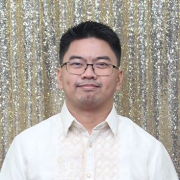
IAM2558 – Financial Operations Firm Co-Founder Bridges the Gap Between Founders and Investors
Podcast Interview with Kevin Gwynn White


With over a decade of experience at Ernst & Young, where he advised C-suite leaders on M&A, growth, and restructuring strategies, Kevin has developed a deep expertise in financial storytelling, strategic planning, and operational scalability.
His work at the venture capital firm Rethink Education further shaped his focus on helping startups bridge the critical gap between product vision and financial credibility.
Kevin discusses how Exbo provides fractional CFO services, outsourced accounting, and transaction support for both startups and funds, with a radical focus on value alignment and operational excellence.
Additionally, Kevin also shares practical leadership insights, such as conducting monthly priority audits and aligning calendar time with strategic focus.
Website: Exbo Group
LinkedIn: Kevin Gwynn White
Check out our CEO Hack Buzz Newsletter–our premium newsletter with hacks and nuggets to level up your organization. Sign up HERE.
I AM CEO Handbook Volume 3 is HERE and it's FREE. Get your copy here: http://cbnation.co/iamceo3. Get the 100+ things that you can learn from 1600 business podcasts we recorded. Hear Gresh's story, learn the 16 business pillars from the podcast, find out about CBNation Architects and why you might be one and so much more. Did we mention it was FREE? Download it today!
Transcription:
The full transcription is only available to CBNation Library Members. Sign up today!
Kevin Gwynn White Teaser 00:00
We were operating and continue to operate in a lot of cases as the entire outsource finance function.
So, the acting CFO, the controller, the accountant, we'd actually started the business trying to just do the CFO angle, but quickly realized there's sort of a deep misunderstanding of what good accounting looks like in that space.
And we really focused on building an accounting function ground up for a lot of these businesses so that we could do our CFO duties. Without it, you really can't.
Intro 00:31
Are you ready to hear business stories and learn effective ways to build relationships, generate sales, and level up your business from awesome CEOs, entrepreneurs, and founders without listening to a long, long, long interview?
If so, you've come to the right place. Gresh values your time and is ready to share with you the valuable info you're in search of. This is the I AM CEO Podcast.
Gresham Harkless 00:58
Hello, hello, hello. This is Gresh from the I AM CEO Podcast, and I have an awesome guest on the show today. I have Kevin Gwynn White. Kevin, excited to have you on the show.
Kevin Gwynn White 01:05
Thanks for having me, Gresh. Appreciate it.
Gresham Harkless 01:06
Yes, I'm super excited to have you on to talk about all the awesome things that you're doing. And of course, before we do that, I want to read a little bit more about Kevin so you can hear about some of those awesome things.
Kevin co-founded Exbo Group in 2017 and focuses on bridging the gap between investors and founders, helping CEOs build premier financial functions that appeal to investors.
His area of focus includes education, software, and e-commerce, and prior to Exbo, Kevin worked as a strategy consultant at Ernest & Young, where he supported large multinational companies in M&A.
During his tenure at EY, he advised C-suite executives, including the CFO of Morgan Stanley and the CEO of Bank of New York, Mellon Markets, in areas of growth, restructuring, and analytics.
Kevin also worked at Rethink Education, a venture capital firm, where he advised their portfolio companies during Series A fundraising.
And he's basically been, from what I can see, a trusted advisor at some of the biggest and most ambitious startups. I can definitely say he has a wealth of knowledge and experience.
So, I'm super excited to kind of dive into that. And his deep expertise in finance and operations has a commitment to helping founders build resilience and scalable businesses.
So, Kevin, super excited to have you on the show. Are you ready to speak to the I AM CEO community?
Kevin Gwynn White 02:16
Yeah, likewise. Yeah, happy to give any advice I can.
[restrict paid=”true”]
Gresham Harkless 02:19
Yeah, absolutely. Well, I guess to kind of kick everything off before we jump into the advice and all the awesome things you're doing, let's rewind the clock here a little bit, a little bit more on how you got started with a car, your CEO story.
Kevin Gwynn White 02:29
Yeah, sure. So, I'll take it way back to the beginning. And so, you gave a great introduction already and with some basic background.
But I worked at Ernst & Young for a decade in their capital market strategy group and their transaction services group.
And that was just my time learning how to be a good consultant, be a good advisor, really sort of getting my calls in the finance and understanding how businesses operate and what best practices look like. And then after that, I went to business school, actually, at first.
And interestingly, the venture capital fund I worked at and Exbo Group, and how it started is all tied in together there.
But when I was in business school, I went to Columbia Business School. And there was a program that actually UVA, University of Virginia, had started to teach the incarcerated population in different prisons across the country different skills that they could actually use once they actually got out of prison.
So those included entrepreneurship skills, financial literacy. And through that, I met the CEO of a company called American Prison Data Systems.
And what they were doing is interesting. They were making military-grade tablets in prison. So, if you go way back to the 90s, if you're in prison for 25 years, you have no access to internet.
You didn't know what a cell phone is. So, when you got out, it was really hard to have the skill sets to get a job or anything back in society, because it's essentially sitting in a time machine for a long time.
And so, I worked with We're going to see this company who was making these tablets so prisoners could get different education on their laptops or on these tablets, sort of function like laptops, and that includes GED, financial literacy, how to sort of integrate back into society.
And it turns out the investor in that particular company was Rethink Education, was the venture capital fund that I actually was also introduced to through business school.
And so, I started working for that VC, but I had a really good relationship with a guy named Christopher Grew, who was running this company, and started really just been a consultant for a long time.
So, I put my consulting hat back on while I was working for this VC and just sort of recognized that this person, who I appreciated and sort of believed in the product they were creating, just needed some help getting over the sort of financial operations back-end hump for the next stage of fundraising, right?
To a certain point of sophistication in your business, unless you have a really good accounting and finance backbone and you can narrate what the future of your business looks like from a financial standpoint to investors, it's really hard to get follow-on fundraising.
And I quickly realized, having been a consultant for a long time, that a lot of other rethink portfolio companies had these similar challenges, right?
These early-stage companies, they just, a lot of the amazing CEOs, but they just don't maybe have the accounting understanding or even really know what good FPA means or what it looks like at all.
Investors do, but the CEOs don't. And that creates this gap where, I mean, sitting on the venture side, I saw it myself, is that you're drinking from a fire hose in terms of potential investments.
And the number one, once you get to a certain threshold, filtration criteria in the investor side is, can these people really clearly explain their financials where they are now and where they're going?
And it's amazing how, I would say, maybe 1 in 30 people effectively do that. You could do that and automatically disqualifies Electronic Night.
It's a very easy way to get from a pool of thousands of people asking for funding down to a pool of maybe a hundred, of which then you can do the rest of your diligence to determine whether they're a good fit for the company.
Exbo Group grew out of supporting that VC's portcos. It worked really well to the point where I just kind of decided to start an entity and start providing these services. We didn't take any outside fundraising.
We bootstrapped, but it started with just me and my business partner, Eric. He had a background in investment banking. He was working at Amazon at the time. He was in Seattle.
He came back over to New York. So, we could really, in earnest, start a company to focus on this. And we grew pretty rapidly from there. So, I think we just started, really, just the two of us.
And now we've got 70 people globally that focus on early and growth stage finance functions and due diligence for different funds.
So that's the origin story, right? It just really, you know, it's one of the, I say all great businesses are started by accident when you just see a market need. And that was absolutely us.
It was just a tremendous market need for this type of support. And so, it was one of those things where you do a good job for one person and then three more people come ask for help. And we scaled sort of naturally that way.
Gresham Harkless 07:26
Yeah, absolutely. So, I know you touched on a little bit, but I want to drill down a little bit more here, a little bit more on where that radical focus is, how you're making that impact, and serving the clients you work with.
Kevin Gwynn White 07:35
At the very beginning, we were just serving venture capital companies, and we were really just doing outsourced accounting, CFO, fractional CFO work for them.
At companies those stage, I think of venture as sub $15 million. We were operating and continue to operate in a lot of cases as the entire outsourced finance function, the controller, the accountant.
We'd actually started the business trying to just do the CFO angle, but quickly realized there's sort of a deep misunderstanding of what good accounting looks like in that space.
And we really focused on building an accounting function ground up for a lot of these businesses so that we could do our CFO duties. Without it, you really can't.
Now, the majority of our companies are more in the growth, equity, lower middle market space.
And again, that might be us doing accounting for a CFO, full-time CFO that's working for a company. And these, I consider 15 to 100 million call-in revenue, who might be the outsourced accounting function, according to CFO.
The other side of the business is our transaction services business, where we work with the funds themselves. So, we'll work with the PV funds, contract them, and we'll do financial due diligence.
Gresham Harkless 08:49
I absolutely love that. Would you consider that to be what I like to call your secret sauce, your ability to be able to have that radical focus and to be able to understand this is what we do, this is what our sweet spot is?
Kevin Gwynn White 08:59
I think internally, that's a huge part of Exbo Group, and what makes it successful is for us, it's really focusing on the place that we are the dominant value.
And, there's no question about authentically. It also makes it incredibly easy to sell. If you go and you talk, I mean, for me, I never even thought of myself as a salesperson, truly.
But if you go and you sit on a call with someone, and I believe authentically and truly in the back of my mind that I can do an absolutely outstanding job for the price this person is going to pay, and I'm going to add a huge amount of value, and it's a very, very good idea for them to engage with me.
It's the easiest sales call in the world because whether they buy it or not, I can sit there at the straight face and look, you really shouldn't do this. I'm going to change your life if you hire us, right?
It's going to be a huge difference in terms of value for you. And so, we just focus really closely on the customers where we can get on the call and we can say that, right?
That I'm not going to go out and pitch someone who I don't think needs my services. That happens all the time when I'm qualifying sales calls.
I will try to have a good network. If someone maybe, is at a stage where they don't really need the level of sophistication that we provide, there's a lot of less expensive options out there that I will go and I will happily refer them to.
So, yeah, for us, it's really knowing what sort of our ideal customer profile looks like. And that took, I think, in the back of our mind, we had it in the last year or so.
We've really solidified and crystallized it, and making sure that we're just going out and pursuing those folks.
Gresham Harkless 10:32
It ends up being such a huge thing. I wanted to switch gears a little bit, and I want to ask you for what I call a CEO hack.
You might have already touched on this, but this could be like an app, a book, or even a habit that you have. But what's something you lean on that makes you more effective and efficient?
Kevin Gwynn White 10:46
The most recent hacker book I read was Richard Rummelt's Good Strategy, Bad Strategy, which was a very helpful book in terms of really clearly defining what a strategy looks like in a company.
I think that's super important. We're starting to get to a size and point where we may go out and look to acquire other companies that can sort of be part of the Exbo Group or merge in some cases, depending upon sort of the type of companies we find in the market.
But before you do that, and before you try to really grow aggressively, understanding exactly what your strategy is, is such a critical exercise.
I liked good strategy, bad strategy, because I thought it provided a really good framework by which to actually go out and design a strategy.
So, I'd say the best hack I have right now, that book is on the top of my list this last year. That has been very helpful in us really clarifying our strategic direction of the firm.
Gresham Harkless 11:44
Yeah, so what would you consider to be a little bit more of what I like to call a CEO nugget? You might have touched on this as well, but it's a little bit more word of wisdom or piece of advice.
I like to say it might be something you would tell your favorite client, or if you hopped into a time machine, you might tell your younger business self.
Kevin Gwynn White 11:58
I would say, I guess, keeping on the topic of focus, one thing I've noticed about me is that if your business is doing well and it's growing really fast, your job changes.
And you often don't realize your job change. What I really try to do now, and I actually make this now a monthly activity, is I have written down what the five most important things I'm focusing on are.
And every single month, the first thing I do is I look at that list, and that goes, it's still true. And sometimes things will get bumped off the list if they do.
Obviously, the thing that got bumped off is still important on the list in the first place for a reason, but it goes to somebody else.
I asked, should I be doing this, or should someone on my management team be doing this? And so sometimes if something new comes on and I have to bump something on the list, try to keep it at five, it goes to someone else. So that's one.
After I'm done looking at that list, I then will look at my calendar and the key things that I'm working on, and I will determine if all the things that are currently on my calendar align with those five objectives.
And so, if something gets bumped off the list, all the meetings that was me managing that particular priority will get delegated to somebody else, and they will get the priority, right? They'll just get that task as part of sort of their key things that they're focusing on.
And so having a moment, I literally take an hour and I block my calendar once a month and I just do this exercise in silence. And that has been incredibly helpful to help the business grow quickly.
Gresham Harkless 13:25
Yeah. I wanted to ask you now one of my absolute favorite questions, which is the definition of what it means to be a CEO.
Our hope is to have different quote-unquote CEOs on the show. So, Kevin, what does being a CEO mean to you?
Kevin Gwynn White 13:34
For me personally, I think it's radical accountability. I think as a CEO, you're accountable to a lot of people. You're obviously accountable to yourself in a way that I think some other jobs aren't.
It's your failure is really or success is very much resting on you. There's no one to point to and say you did a bad job. And so, it's your fault, right? It's you're accountable to yourself.
You're also accountable to your employees. If you have a good management team, you want to keep them happy.
You want to make sure that they're developing in their careers and there's a path. forward for them in the future. You're accountable to your investors.
You want to make money with them and provide the right return. I see a big mistake a lot of people make in the CEO seat when they do have investors is overpromising, which only hurts like CEO and investors, because you should be responsible and accountable for making sure that you're holding up the side of the bargain that you agreed to with them.
And I think setting expectations is important there. So, I think that's the biggest piece. It's not for everybody. It is a ton of responsibility and accountability.
That being said, if you're willing to work on yourself, and you take that accountability seriously, and you just, instead of saying, that's the market's fault or that's somebody else's fault, I try to always say, well, that's my fault.
And what could I have done? I have a lot of power in the seat in my organization. And indirect, direct, what things could I have done in advance differently to have gotten a different outcome if something goes wrong?
And I think for me, it's just that constant learning and acceptance that for better or for worse, the outcomes are mapped back to you. And I understand that there are things outside of your control, but most of it is inside.
And so, I think for me, being a CEO is just recognizing that and accepting it and just trying to be better every single day in order to do right by the folks that are depending on you.
Gresham Harkless 15:30
Truly appreciate that definition. And of course, I appreciate your time even more.
So, what I want to do now is pass you the mic, so to speak, just to see if there's anything additional that you can let our readers and listeners know.
And of course, how best people can get out of view, find out about all the awesome things you and the team are working on.
Kevin Gwynn White 15:44
In terms of how to get in touch with us. And if you want to know more, you can go to exbogroup.com.
That's E-X-B-O Group.com. And there's a contact form right there. If you ever want to chat with us, you can reach out.
We'll get back to you within 24 hours. And more information on the company, and that website, you can check out. But yeah, we'd love to, if you want to get in touch, we'd love to talk to you.
Gresham Harkless 16:05
Absolutely. Well, I truly appreciate that, Kevin. Of course, to make it even easier, we'll have the links and information in the show notes as well, too, so that everybody can follow up with you, find out about all the awesome things that you're working on and the team is actually doing. I hope you have a phenomenal rest of the day.
Kevin Gwynn White 16:16
Thanks for having me, Gresh. Appreciate it.
Outro 16:18
Thank you for listening to the I AM CEO Podcast powered by CB Nation and Blue 16 Media. Tune in next time and visit us at iamceo.co. I AM CEO is not just a phrase; it's a community.
Be sure to follow us on social media and subscribe to our podcast on Apple Podcasts, Spotify, Google Podcasts, and everywhere you listen to podcasts. Subscribe and leave us a five-star rating. This has been the I AM CEO Podcast with Gresham Harkless Jr. Thank you for listening.
[/restrict]