IAM2851 – Industrial Designer and Artist Builds Great Business Culture and Products
Special Throwback Episode with Matt Barnett

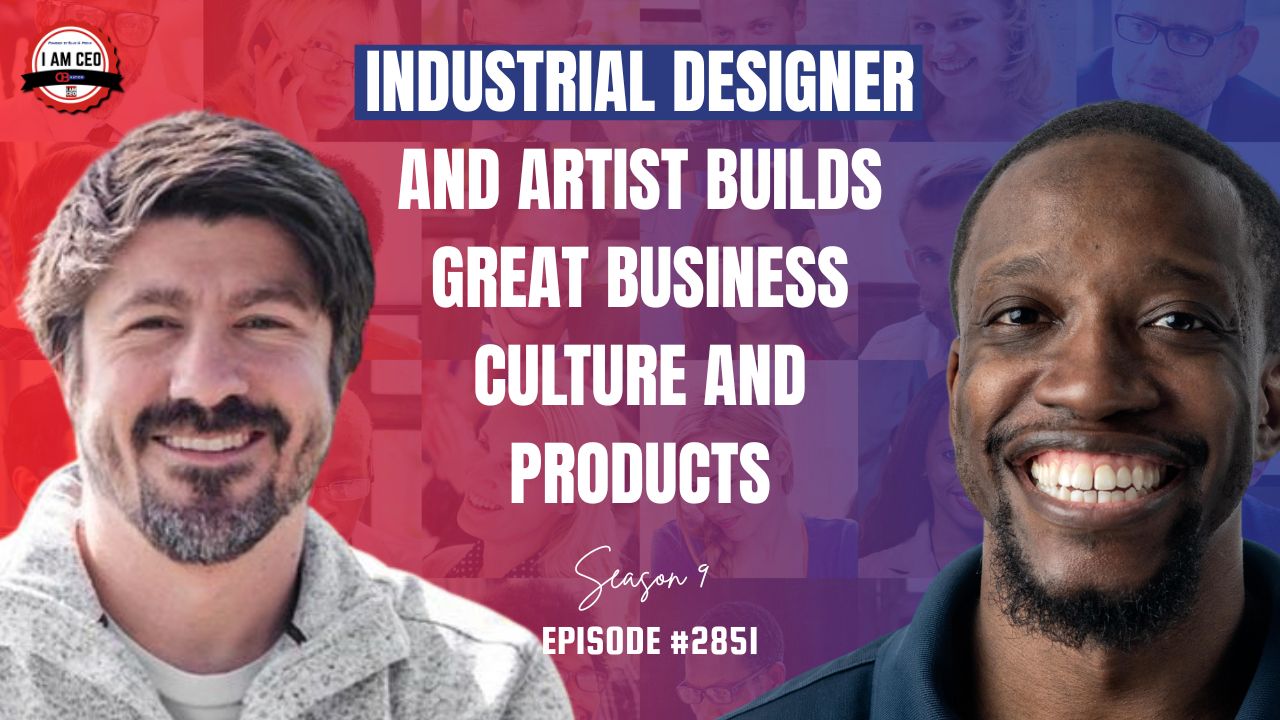
Originally a British industrial designer & artist, Matt turned everything upside down to launch a tech company in Sydney Australia. After a couple of false starts, Bonjoro was born from a sales hack for his first business, where Matt would send every new lead a personal video instead of a plain-text email. Matt’s love of building great products is only surpassed by his total commitment to building a great business culture, and Matt asserts that Bonjoro’s “customers as friends” culture has been the main driver of the business's success. His goal is to be the next Zappos, to be the most loved brand in the world.
- CEO Hack: Doing things early in the morning
- CEO Nugget: Automation to focus on relationships
- CEO Defined: Doing the jobs no one else wants to do in the company
Website: https://www.bonjoro.com/
Twitter: @bonjoroapp
Instagram: @bonjoroapp
Previous episode: https://iamceo.co/iam496-industrial-designer-artist-builds-great-business-culture-and-products/
Hear Gresh's story, learn the 16 business pillars from the podcast, find out about CBNation Architects and why you might be one and so much more. Did we mention it was FREE? Download it today!
Transcription:
Matt Barnett 00:00
We say, we always say automate process, but never relationships. Now, I think it's really important. Yes. It's not about. It's about everything you do. I think the whole point of automation, which is awesome, is to remove all the process that you do not have to do. So automate your accounting, automate your kind of hr, automate your emails and go your transactional stuff. The whole point is it should free you up with your time to spend on partners, on customers, on investors, on. On team members, on managing how to degrade those team members. Again, the automation that you're not supposed to be automating yourself, you're supposed to be automating the processes and then focus on relationships and never let that go because that's the key to growing a business. The bigger your team gets, the ability to do that is more and more important.
Gresham Harkless 01:10
Hello, hello, hello, this is Gretch from the I Am CEO podcast. I have a very special guest on the show today. I have Matt Barnett of Bonjouro. Matt, it's awesome to have you on the show. Hey, Gresh.
Matt Barnett 01:18
Awesome to be here.
Gresham Harkless 01:19
Definitely awesome for me as well. And what I want to do, which is read a little bit more about Matt so you hear about all the awesome things that he's doing and. Originally a British industrial designer and artist, Matt turned everything upside down to launch a tech company in Sydney, Australia. After a couple of false starts, Bonjouro was born from a sales hack from his first business where Matt would send every new lead a personal video instead of a plain text email. Matt's love of building great products is only surpassed by his total commitment to building great business culture. Matt asserts that Bonjouro's customers as friends culture has been the main driver of the business's success. And his goal is to be the next Zappos, to be the world's, the most loved brand in the world. Matt, are you ready to speak to the I Am CEO community?
Matt Barnett 01:57
I am.
Gresham Harkless 01:58
Good to go. Awesome. Let's do it. So I wanted to kick everything off. I wanted to hear a little bit more about your CEO story. Well, that you get started with the business.
Matt Barnett 02:04
Yeah. So. So originally, like I said, artist, designer, trying to Find my way. I'll be honest, I wasn't really, I wasn't really cut out. So I think work for someone. I had a, had a job after uni. It was great, but I always wanted to kind of do my own thing and take my role. So like I said, I didn't last very long at that. Starting kind of like consultancy and work as an artist, it was great, but it wasn't really that scalable. So I love the idea of having a team and be able to grow something. Kind of like you grow a machine, basically. So, you know, in London, try and do that. I thought, you know, what the best way to start, to kind of kick start this office, just to move country, leave everyone behind, meet a whole bunch of new people and kind of reset. So I moved to Sydney. I was about 25, went on a date with a UX designer and we didn't hit it off, but we did start a company and that's, that's how it all kind of started that that first company didn't work out. We had investment, we raised funds, we kind of built it went on, it crashed and burned as a lot of first dives do. Rather than kind of closing it down, we kind of, I guess kind of pulled together, pulled it into a company, launched that out. That company did okay. And then Bonjouro was actually the third iteration that kind of launched off that second company. So by no means an overnight success or anything. It's been a struggle, but the main thing is just you just keep going and we got there eventually.
Gresham Harkless 03:17
Yeah, it makes so much sense. And I love kind of like the story of how, you know, Manjoro got started because a lot of times whenever you start a company, you know, you hear this. But it's great to kind of hear like stories like your own that actually speak to this, where a lot of times there's different opportunities you might get, whether it be learning opportunities or even in your case where it was actually a part of the process that you actually did to say, hey, this is actually something that might be scalable, might hit all those kind of pillars that you wanted to hit with your business and at the same time provide really, you know, phenomenal product for, for end users as well.
Matt Barnett 03:45
I think if you, I think what happens, you never realize it happens is if you're in the industry and we were doing video apps, so we do video apps maybe eight years ago on phones when video just kind of came out. And it's hard to believe it's been not such a short time but we were playing around and it was just too early for it all. However, like a bunch of years later, we're still trying to do stuff with video and it turns out suddenly video becomes a thing. You know, data networks catch up so we can get uploads done. You know, we, without knowing it, were kind of experts in the field. So when we ended up doing the whole Bonjour thing and we did as a hack for this other business where we were trying to do it as a sales thing where we would send messages, the messages to clients who in New York and London and were based in Australia, in the middle of nowhere. We would send these messages through. People love them. People picked up and people said, can we use this? So we kind of ran with that. But again, it's not. In hindsight, it's not that surprising. If you spend long enough in the industry, you like you are an expert, you just don't realize it. And then it becomes almost a case of if you were there long enough, if you hang in, you can't, you're kind of going to make it anyway, you know, that's what I kind of think so. And you see it time and time again. People who just stay in that long enough, they end up making it because you can't help but learn and become good at what you do.
Gresham Harkless 04:47
Yeah, absolutely. You probably start to see, because I've always heard, and definitely, if you let me know if you agree with this, where a lot of the best things that are created are from like something that you wish was there. And by being in the industry, having done it for so long, you start to see not only obviously being an expert at your craft, but also those gaps and opportunities that aren't either being done or maybe not being done to the level that you see as well too. And then that provides that opportunity.
Matt Barnett 05:08
Yeah, and it's not obvious at first. I mean, I love B2B software. So like the foot, like B2C. So business to consumers, not really my space. A lot of you can't have their first business go, right, let's just take business to consumer. It's actually a lot harder. People understand it more. But everyone's looking at some ideas.
Gresham Harkless 05:24
Now.
Matt Barnett 05:24
When you get into kind of a business to business, I think the ideas are more nuanced. They're kind of in, in, in. In niches or, or niches, so it's hard to find them. But when you do find them, they're probably a lot more profitable. So I think it's actually, again, like, I actually prefer competing in B2B, I find it easier. But you do, but you do get domain knowledge to kind of like to work out what it is that that's going to work. And it's not necessarily something that you're going to come up, you know, with in your bathroom, having a coffee on a, on a, on a Sunday.
Gresham Harkless 05:50
Yeah, that makes so much sense. Yeah. I definitely live in the B2B world, so I could definitely speak to that. And I know how, you know, important it is that entrepreneurs, business owners and organizations always need something to kind of help run their businesses even better. So I appreciate that. So I know I touched on it a little bit. I know, of course you did as well. I wanted to hear a little bit more about Bunjour. Can you tell take us through exactly how it works and how we can use it as business owners?
Matt Barnett 06:11
Yeah, sure. So essentially. So it was that initial idea where we, with a sales as a team with Vega pitching, we used to do the whole lead funnels, the emails, everything else. And it was kind of a bit frustrating because we weren't. So we weren't great a bit. But so much of our selling is on personality, like our brand and my team, everyone's a bit quirky. So we just thought we built a hack where we used to put videos. We basically host videos online, hook it up to an email, send that email out. It's the first piece of communication someone would get would be a video from me and it'd be one to one personal. So I'd be like, hey, hey John from Ogilvy. So you signed up? You know, from, from, from Brooklyn. You know, we already work with, with, with Budweiser and, and Huggies and X, Y, Z. You know, I'm not in the city, as you see, I'm in Australia. There's, there's like the Opera House. But I'll be in, you know, in town in, in six weeks time. I'd love to kind of pitch you guys. And so we sent these videos out and we built it so that basically it took us a minute to do it. So we would record the video. The video gets bundled up, it gets branded, it gets put into an email and sent. So all we're doing is the video side and that's essentially what Bonjour is now. Over time it's evolved a bit more. So you kind of work as a layer on top of a CRM or mailing list or a Patreon or any kind of customer source that you have. So when a customer performs a certain action, so they donate or they enter your lead or they become a paying customer or they do xyz. It's all very kind of custom. Or they're, you know, or they purchase online on the E Comm Store. We then send that user into the Bondura system. We notify a specific team member. They literally click on the person, do, do the video. We show the information there. So the idea with doing these personal videos is that you have to be able to scale them and yet you've got to hit the personal aspect. So it's the personal stuff that works. It's not actually the video. It's the fact you've taken a minute out of your day and you're like, hey, grash, you know, see you on a podcast. I am CEO, checks out. Love this episode. Blah. So again, the person side. So we show the information. So you can do that in a minute. You press send, you get back to work. So that's the idea. It's used particularly for converting leads and activating customers. And it's like it's those industries where a little human touchpoint really stands out and no one else is doing it. People like that with social creatures, they warm to it. They warm to you and they go, hang on, I'm going to take a second look at this.
Gresham Harkless 08:11
Yeah, that makes so much sense. And especially in this day and age where, like, the personal brand is becoming so big, I think more people, you know, the same was always, you know, people do business with people they know, like, and trust. And of course, video and actually having that interaction is a way to do that. But I think it's becoming even more important where there's so much accessibility to people that just brands, but the people that within the CEOs, the CMO, all the people that within the company that you really can have a really strong relationship in touch and especially if you're doing sales to. To kind of break through that noise.
Matt Barnett 08:39
Yeah, exactly. And so the funny thing is that you look at the way we are and now people used to do this. Yeah, people back in the day, you go to your grocer or your butcher, they know what you want and they have it ready for you. You have a relationship. It was very enjoyable. Now, that obviously changed. We went online as we went to scale, which was fine, and it's the way we had to go. I think what's happened, though, is over. I mean, like, how long we'll be online now, purchasing, like kind of 10 years. I think people have gone to the extreme where they've gone and Put all bots in automation and stepped back fully and everyone goes, well, I just want to have minimum touch points so I can scale faster. Now what you find is the businesses that make it often are the ones that also somehow try and get an. A human element in there. You know, great customer service is one
Gresham Harkless 09:14
of the best ways to grow a business.
Matt Barnett 09:16
So all we're saying is look at certain points on a customer journey. It is worth your, you know, a minute of your time investing in that customer. Like one on one, not doing the whole scale thing because that will pay back and that's much more likely to convert that user. So again, what we're saying is basically it's almost like, how much time do you need to invest to get a customer to choose you over a competitor or stay with you for longer? But companies that don't have that, if you do, then you're kind of well ahead of them on the kind of customer support and service and excellence kind of point of view.
Gresham Harkless 09:45
Yeah, that makes so much sense. Just those little small things go so much farther and you start to realize that when you have more and more interaction. So I wanted to ask you for what I call your secret sauce. And it could be for you personally or your organization, but what do you feel kind of sets you apart and makes you unique?
Matt Barnett 09:58
Look, I do think we are an ethos led company. So brand. I'm a massive fan of brand, like creative background. But I think any brand is not just a logo. Like that's, that's people like brands. Like, it's not like, yeah, logo is not the last thing you do. Brand is kind of like. So it's like how you hire, like why you're doing things, decisions you do make and decisions that you definitely don't make. So which side, like gray line do you want to kind of exist on? So with us, you know, we were like, for instance, we have people come in, they go, but surely, you know, with the whole, the whole kind of like, you know, VR side of things, you guys could just start to, you know, fake these videos or maybe you record, you know, a video for grash and then every grash that signs up, even though it's not very common name.
Gresham Harkless 10:36
Yes.
Matt Barnett 10:37
Like you said to every single person, I'm like, okay, it's two things here. Number one, it's not gonna be that person because it's just the name. Secondly, if you can't spend a minute type of time on the customer, probably deserve them. And thirdly, if you get caught, like, there will be backlash. You Know like stop. And so if us is a very clear note, that kind of thing. And those decisions we say no to, but that comes because of brand ethos kind of values. So it's extremely easy for us to make decisions. We just go, okay, does it fit with business vision? Yes or no? Does it fit with the brand values? Yes.
Gresham Harkless 11:05
No.
Matt Barnett 11:06
Do the team want to do it? Our customers want it. And so it allows to make decisions a lot quicker. I think we don't kind of mess around. So I think having a strong brand, having a strong values from day one, a lot of companies don't do that. They kind of leave the brand to last and culture to like next like 5 people, 10 people. If you start at the beginning, you start to kind of build momentum. And so I think with Bonjouro, I've always said I think our brand is more valuable than our products. And when you become a startup, you know the first product you build is going to be not, not great. Say it nicely. It's going to be piece, a piece of whatever. Yeah. Because you have to invest a lot of time but you'll have customers who will be like, you know what it's missing all these things. But we're going to back you anyway because we want you to see you succeed. Now if all you are is a product, that ain't going to happen.
Gresham Harkless 11:51
I definitely appreciate that and I wanted to switch gears a little bit and I wanted to ask you for what I call a CEO hack. So this could be like an Apple book or a habit that you have, but what's something that makes you more effective and efficient?
Matt Barnett 12:01
Okay, so this is a swag home one but I, I love the, the outdoors, the outdoors are thing. So I tend to get up at 5:30 in the morning. Now we are based here in Australia, so right now it's what, seven in the morning here. So doing, doing things like podcast stuff early in the morning. We know like I Normally do them 6am Obviously time zones have driven that, but honestly since doing it the last few years, it makes such a difference. I find if you get up early, all my work gets done before nine. And that's before because again like, like if you end up running a team that's growing, you know, you end up with one job which is to do all the jobs no one else wants to do. That's a job of CEO.
Gresham Harkless 12:37
I appreciate that hack. And now I wanted to ask you for what I call a CEO nugget. So this could be a word of wisdom or a piece of advice or if you can hop into a time machine, what would you tell your younger business self?
Matt Barnett 12:46
So. Well, piece of advice, I'd say, I mean, this is, this is a bit of a company thing, so I'm going to slip it in here. But we say, we say automate process, but never relationships. Now, I think it's really important. Yes. It's not about, it's about everything you do. I think the whole point of automation, which is awesome, is to remove all the process that you do not have to do. So automate your accounting, automate your kind of hr, automate your emails and go your transactional stuff. The whole point is it should free you up with your time to spend on partners, on customers, on investors, on your own team members, on managing, helping to grow those team members. Again, the automation that you're not supposed to be automating yourself, especially automating the processes and then focus on relationships and never let that go because that's the key to growing a business. The big your team gets. The ability to do that is more and more important.
Gresham Harkless 13:33
Definitely appreciate that. So now I wanted to ask you my absolute favorite question, which is the definition of what it means to be a CEO. And we're hoping to have different quote unquote CEOs on this show. So, Matt, what does being a CEO mean to you?
Matt Barnett 13:44
So I said earlier, it's, it's doing all the jobs that no one else wants to do in the company. So it's not doing all the fun, it's finding fun in the. Can't say that word. Shitty.
Gresham Harkless 13:55
Now you're good.
Matt Barnett 13:59
You gotta enjoy all these shitty jobs. You gotta, you gotta see it as. Need to learn you, you can't ever say no. So. And you have to. Yeah. And that, that puts you in place as a leader because all your team see that you'll do that. It gets the jobs done. No one else wants to do it gets you up every single day. But those, those tough jobs, you, you're the guy, you're. It's the buck stops with you. So don't sh.
Gresham Harkless 14:21
Absolutely. Yeah. I think a lot of times, you know, obviously if you can't find somebody that will do those jobs, that's absolutely great. But more than likely it may not be somebody that wants to do them. So a lot of times, because you are the CEO, you're the one and leader, so on and so forth, you have to roll up your sleeves and kind of do that work of what other people don't want to do. Put out a lot of the fires as let's talk about.
Matt Barnett 14:37
So, yeah, you're the guy. You're the guy. You can work Saturday and Sunday and midnight. You know, you're the. Well, the guy. The girl that could do that. You know, depending what happens here. And often you'll have to figure something out before you can even prioritize it. Because you want to understand it as a ca. You kind of want to understand all parts of your business. You're not just in marketing or just in product. You have your finger a lot more touch points. So you understand business probably better than anyone else. Then when someone comes in, you understand what they're doing. Yeah. And you want to hire people who are better than you, but you don't want to hire people where you don't understand what they're doing because it's very hard to vet what they're doing and whether it's successful. So, you know, again, early days to kind of like build a large business. Hopefully, you know, that will change over time. But the beginning, you're doing everything. Yeah.
Gresham Harkless 15:19
Your hands in all of the pots. You're it.
Matt Barnett 15:22
So enjoy it.
Gresham Harkless 15:23
Exactly. Enjoy the ride. Well, awesome. Well, thank you so much, man. I appreciate that definition. Appreciate your time even more. What I wanted to do is pass you the mic, so to speak, just to see if there's anything additional you want to let our readers and listeners know and then, of course, how best they can get a hold of you. Find out everything you're doing at Bonjouro and just connect with you overall.
Matt Barnett 15:39
Again, if you remember one thing from this conversation, I think it's the whole automated process, not relationships. I think more companies can do that. Then it's a good thing for the world as well. It's good for consumers. I think we'll build better businesses and we won't hit such challenges that many of the corporates kind of now are hitting. So build good businesses. Do the right thing. If you get in touch with me, you can hop on Bonjouro. If you ever sign up, you'll get a video, if likely from me or on the other team. You'll end up talking to me at some point. You can reach me on LinkedIn as well. Just look for Matt Barnett, look for the guy in the bear suits, and that's it. Reach out anytime. I'm for any advice, I'm here to help.
Gresham Harkless 16:12
Well, thank you so much again, man. We will have the links and information in the show notes as well, too, so that everybody can follow up with you. But I appreciate you and I hope you have a phenomenal rest of the day.