

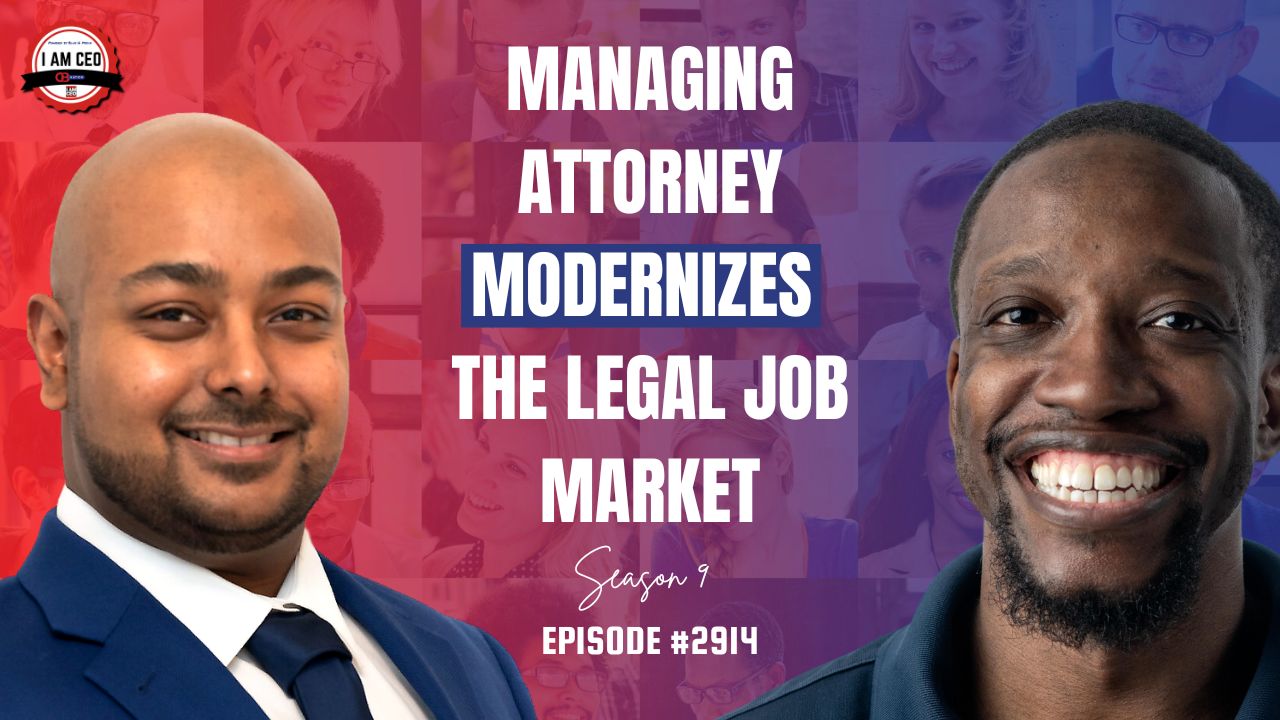

Managing Attorney Shahed Kader is licensed to practice law in the District of Columbia (Washington, D.C) only. He is not your typical lawyer. Before launching the practice, he worked in sales and growth for technology companies for 10 years.
Shahed managed the partnership that led to LocalVox’s acquisition, helped Stack Overflow better their sales and marketing collaboration, and led Aptible from $500,000 to over $10 million annual recurring revenue (ARR) leading sales – giving him an unmatched understanding of how to grow technology companies.
- CEO Hack: Trello for productivity
- CEO Nugget: Cultivate your relationships with people out there
- CEO Defined: Ability to lead from behind
Website: https://www.kaderlaw.com/
Previous episode: https://iamceo.co/iam532-managing-attorney-modernizes-the-legal-job-market/
Hear Gresh's story, learn the 16 business pillars from the podcast, find out about CBNation Architects and why you might be one and so much more. Did we mention it was FREE? Download it today!
Transcription:
Shahed Kader 00:00
You know, cultivate your relationships, meet people, get out there, get to know them. You know, I see a lot that people will, you know, immediately meet somebody and try to sell them on something and not sell them. And it'll end up, then they'll just like move on from it. I don't think that's a great idea. I think you should always cultivate your relationships, get to know them, keep them in mind. If you think of somebody, uh, when something comes across your inbox or anything, forward it to them. Keep that relationship alive because it may come back to you later on. They might need you later on in one way or another.
Speaker B 00:29
Yeah.
Shahed Kader 00:30
It may lead to business, may lead to a very important piece of advice when you need it, may lead to, you know, them being extremely successful and they can help you out at a later point, or it may lead to nothing but a really good friendship, really, but cultivate your relationships.
Gresham Harkless 01:11
Hello, hello, hello. This is Gresh from the I Am CEO Podcast and I have a very special guest on the show today. I have Shahed Khater of khaterlaw.com. Shahed, it's awesome to have you on the show.
Shahed Kader 01:23
Hey, thanks, Gresh. Thanks for having me.
Gresham Harkless 01:25
Yeah, no problem. Super excited to have you on. And, uh, what I wanted to do was just read a little bit more about Shahed so you can hear about all the awesome things that he's doing. And managing attorney Shahed is licensed to practice law in the District of Columbia, Washington, D.C. only.
Shahed Kader 01:37
He's not your typical lawyer.
Gresham Harkless 01:39
Before launching a practice, he worked in sales and growth for technology companies for 10 years. Shahed managed the partnership that led to LocalVox's acquisition and helped Stack Overflow better their sales and marketing collaboration and led Aptible from $500,000 to over $10 million in annual recurring revenue. Leading sales and giving him an unmatched understanding of how exactly to grow. Shahed, are you ready to speak to the I Am CEO community?
Shahed Kader 02:03
Yeah, absolutely.
Gresham Harkless 02:05
Awesome. Let's do it. So I wanted to kick everything off with what I call your CEO story and hear a little bit more about what led you to start your business.
Shahed Kader 02:11
Yeah, sure. So, I mean, uh, you, you read the bio. So, uh, thank you for that. That's kind of, that's pretty much accurate. So 10 years ago, I actually graduated into the recession back in 2008. Um, worked for the family business for about a year and then I got into sales, uh, first for a local newspaper in Queens, New York. I did sales there for about 3 months and then I joined a couple of different advertising technology companies and agencies. Eventually, and I grew my career in sales, I got pretty good at it and I decided that I want to do something more. So I started law school in the evening starting in June of 2000, I'm sorry, August of 2013. I started law school at New York Law School at Tribeca, New York evening division. And between 2013 and end of 2016, I was in law school. At the same time, I was still working. I was running sales for a company called Actual, as you mentioned. I was leading them from about $500,000 in annual revenue to just over $10 million. Once I graduated, what I decided was I wanted a level of autonomy, and I started planning, how am I going to do that? And I wanted to start my own company, and what am I going to do with it? So what I decided was I would take this decade of experience that I have working with technology companies, growing them, helping them to exit, helping them understand how to grow, and combine it with my legal education and kind of launch a firm accordingly. So it would be a little bit of a different approach. I'm not your typical, you know, graduate from high school, graduate from college, go to law school, go for a big firm and then start your own. It's more of a fresh approach with a very deep understanding of how exactly technology companies work. So I built this firm and so far, you know, I launched it back in June of 2018. I went full-time at it earlier this year. Uh, and so far so good.
Gresham Harkless 03:50
Nice. Well, I definitely, you know, appreciate that. And I know when we talked offline, we talked about how kind of some of the synergies we had when we first connected, like, uh, I didn't realize that you worked at a local newspaper too, because I'd worked for, I think that my last job was working at a local, uh, kind of hyperlocal newspaper. Um, yeah. And then of course, like, uh, the whole, um, kind of sales background, because I kind of marveled at the ability to kind of, of course, you know, know that technology, but know it from a sales aspect because I, I think most people will make sure that they get the law down. And of course, that's of extreme importance, but understanding the sales and understanding how exactly to do that and actually grow like a technology company is something that not a lot of people usually go into and know about.
Shahed Kader 04:28
That's right. That's right. So yeah, it's so far so good. It's related pretty well to my client base. I have a very niche client base that comes to me with specific needs and I've been able to help them.
Gresham Harkless 04:40
Yeah, absolutely. That's definitely, you know, good that they're able to, you're able to provide those services to help out. So I know we touched it a little bit, but I wanted to drill down a little bit deeper. Could you take us through exactly like what types of things you do for clients, kind of like how that process goes and what kind of thing, what kind of problems you help solve?
Shahed Kader 04:57
Sure, absolutely. So, um, what I do for clients, I basically concentrate on 2 types of law. It's business law and data privacy law. So business law is actually a combination, right? It's business, it's corporate law, it's contract law, employment law, and a little bit of intellectual property. The combination of that can all fall into business law. And what I help is I help my clients kind of drill down on what they need to do from a formation standpoint, from the corporate standpoint, how to split up their stock and shares amongst their employees or partners and founders, how to drill down on contract policies, procedures that they need to run the company, how to define or read contracts that come their way, whether it's from another software company or a vendor that they're working with or anything like that. And then of course, intellectual property, how to protect what they have, whether it's filing a trademark. I don't do patents. I'm not a patent attorney. Or whether it's filing a trademark or protecting your trade secret. So I work with that, with business law. It's all transactional though. So my, it's strictly transactional work that I do, meaning I don't go to court. I don't do litigation. I don't sue people. So if you need to sue somebody, that's totally fine too. The good thing is that with my firm, I have built an entire ecosystem of other attorneys that I work with that do all the things that I don't do. And there's plenty of things that I don't do. So if you need some, if you need litigation help, if you need securities law help, if you need real estate law help, anything like that, I can send you to somebody that could work with you. On the other end of things, I also do data privacy law, which is more specific data privacy law. It's more of an emerging kind of thing. There is lots of regulations coming out. There's existing regulations, there's future regulations coming out. You had HIPAA in the past for healthcare and healthcare technology. You have CCPA and GDPR. Uh, which is California Consumer Privacy Act and the General Data Protection, uh, Act from Europe that are, that are in effect and coming into effect. Uh, and a lot of these technology companies actually need to follow that because they have, they're kind of agnostic when it comes to where their clients come from. So with the CCPA, if you have clients in California, if you're handling like some, if you meet some certain specific criteria, you're going to have to implement certain specific data privacy kind of regulations and policies around your entire organization. So I help companies kind of figure that out.
Gresham Harkless 07:08
Nice. Well, I definitely, you know, appreciate that. And I know that, um, well, do you know if there is like a, maybe a certain indicator that they know that they should call you? Is it because I know you obviously cover different aspects, um, between, you know, the business law and the data privacy law, but do, is there kind of some indicators to let people know?
Shahed Kader 07:26
To be honest with you, if you are running a business and you're handling, you know, if there's anything, if you're working with other people, you should probably have, whether it's me or somebody else, you should have an attorney that you could call to kind of handle this stuff. So the main service offering that I offer, it's called general outside general counsel. So that means that, that means that I'm your legal point of contact for your company. So you have a question around this contract that came in, you have a question around this employment agreement, anything like that, you would call me and either I tell you, okay, I can handle this for you, or no, I put you to somebody else that can absolutely handle it for you. So if you are in business, you should have at least a point of contact. It doesn't mean you have to pay them 10% thousands of dollars. That's not what I charge. And I probably, I made it affordable for small businesses and startups, but it does mean that you should have somebody there. It's just like your accountant, right? You have your accountant handling your taxes. You have other service providers handling different things. It's in your best interest to protect your assets, protect your liabilities, protect and protect your back really.
Gresham Harkless 08:20
Yeah, absolutely. And I think I love the fact that you have kind of like that network or people that you've connected with that you can refer people to, as you said, like if it's real estate law or something along those lines. Because I think sometimes, you know, We can kind of get in the trenches, so to speak, and try to be an expert, subject matter expert in everything. But I think really, you know, you reach a level of success when you're able to kind of have that person where you're able to connect with it related to law, especially for you, that can help you to navigate and answer some of those questions.
Shahed Kader 08:48
So that's right. That's like anything else. Like, you know, I could be a software engineer, but I'm not going to spend my time doing that. I could be a marketing expert. I'm not going to spend my time doing that. I'd rather concentrate on what I'm good at and really hone in on that and make sure that my business is successful and leave the, you know, the expert stuff to the other experts.
Gresham Harkless 09:06
Exactly. Exactly. Knowing our zone of genius and staying in there is the key. I definitely say as well. So, um, you might've already touched on this, but I wanted to ask you for what I call your secret sauce. And it could be for you or your organization, but what do you feel kind of sets you apart and makes you unique?
Shahed Kader 09:21
Sure. I think I'd say it is my practical experience. I have practical experience working at technology companies, doing sales with them, doing growth with them, helping them grow. I've seen a company grow from, you know, 8 people to 30 people, from 50 people to 200 people. Um, and I can actually, you know, look at your company, look at your organization, say, hey, I've been in your shoes. I know what you're going through right now. And with that, you know, decade of experience or so, that gives me a little bit of an advantage of actually understanding not only from a legal standpoint, but also a an empathetic standpoint, from a business standpoint that, okay, I know that you're going to have to deal with hiring people and getting out of stock at some point. I know that you're going to have to deal with, uh, found— it happens. You're going to have to get into an argument with your co-founder. He might break off the company, things like that. So that experience, that practical experience is really my secret sauce. And so far, you know, it has resonated pretty well with my clients. Uh, and I hope it continues to do so.
Gresham Harkless 10:14
Awesome. So I wanted to switch gears a little bit and I wanted to ask you for what I call a CEO hack. So this could be an app, a book, or a habit that you have, but what's something that makes you more effective and efficient?
Shahed Kader 10:24
Sure.
Speaker B 10:25
Yeah.
Shahed Kader 10:25
I mean, as an app, I can give you a couple of things. First of all, I use Trello all the time for everything. Trello is a kind of productivity tool. You can make lists, you can move things along different stages of where you are. So it's Kanban style if you're familiar with it. So you can say like, you know, one side of the list is to-do, one side of the list is doing, one side of the list is done. And as far as books are concerned, you know, there's several books that come to law specifically around technology startups. I really like the book Venture Deals. Uh, the, it's by Brad Feld.
Gresham Harkless 11:01
Nice. I definitely appreciate that. And, and, um, so now I wanted to ask you for what I call a CEO nugget, and this could be around, uh, business law or data privacy law, but it's kind of a word of wisdom or a piece of advice, or maybe even something you might tell your younger business So yeah, look, I think that it doesn't have anything to do with business law or data privacy law.
Shahed Kader 11:19
My nugget would be, you know, cultivate your relationships, meet people, get out there and get to know them. You know, I see a lot that people will immediately meet somebody and try to sell them on something and not sell them. And it'll end up, then they'll just like move on from it. I don't think that's a great idea. I think you should always cultivate your relationships, get to know them, keep them in mind. If you think of somebody. Uh, when something comes across your inbox or anything, forward it to them. Keep that relationship alive because it may come back to you later on. They might need you later on in one way or another. It may lead to business, may lead to a very important piece of advice when you need it, may lead to, you know, them being extremely successful and they can help you out at a later point. Uh, or it may lead to nothing but a really good friendship, really. But cultivate your relationships. I, you know, when I first got into sales earlier, I would burn some bridges and Not in a bad way, just I didn't stay in touch. But once I started keeping everything alive, especially with people that I think would, you know, we have like minds, we're pursuing the same thing, started cultivating relationships. I see a lot of things come back to me later on.
Gresham Harkless 12:24
Yeah, absolutely. And I think especially, you know, in business, you kind of have to have that long-term approach. And as you said, cultivate relationships. A lot of times I hear, you know, farming, not hunting. So a lot of times, especially in sales, it's all about hunting, getting the next deal, getting the next deal. But when you have that farming and, and developing those long-term relationships, that helps you to, to build, not just at that time sometimes, but often, you know, years down the line. Because as long as you're getting visibility about what it is that you do and talk about it to people, then they might, you know, you might become top of mind later on.
Shahed Kader 12:56
Yeah, that's right. Exactly.
Gresham Harkless 12:58
Awesome. Awesome.
Shahed Kader 12:59
Awesome.
Gresham Harkless 12:59
So now I wanna ask you my absolute favorite question, which is the definition of what it means to be a CEO. And we're hoping to have different quote unquote CEOs on this show. So Shahed, what does being a CEO mean to you?
Shahed Kader 13:09
I think it, being a CEO is having the ability to lead from behind, really. What that means is like, you don't force people to do things. You don't crack a whip at them. You don't drag them along, but really take a holistic view at everything that's going on with the team that you're working with. You know, some people might work out, some people might not work out, but figure out how you can help them do their job the best. So you're leading this ship, obviously, but to accurately lead the ship, You need to be able to see what specific people need and what, from what angle they need it from. If your marketing department needs a bigger budget or they need guidance through somebody that has a specific knowledge, like, you know, relationship marketing, whatever it is, account-based marketing, try to facilitate that need or acquiring something that'll help that need. The same goes with sales. If you think that the sales department could use a better piece of software, Or if they're struggling with demos and you'd like better kind of guidance around what a pitch should sound like, you know, find a way to help them there, but just holistically lead from behind and help the team achieve. And that way you can all work on going towards the same direction of growth, of understanding, of reaching your goals, whether it's something that's a public benefit, whether it's a corporate benefit, whatever it is.
Gresham Harkless 14:26
Yeah, that makes so much sense. And I think, you know, so many times, you know, Uh, I was thinking of, um, if you help enough people get what they want, then it helps you to get what they want, get what you want. And I think so many times we forget that aspect. We forget about like what, and trying to figure out what success means from team members. And even like, as we kind of talked about from a networking and connecting and growing mindset of just having that kind of leadership from behind related to our clients and people that we're working with. Because I think if you are that solution-oriented person and you help people, you know, solve those solutions, whether they're in your wheelhouse or you You're connected with somebody, you become that person, and then you start to, to be that leader and be that person that is able to cultivate and build those relationships.
Shahed Kader 15:03
Right, right. It all, it all ties back together. Lead from behind, you're able to do that.
Gresham Harkless 15:07
Absolutely. Well, I definitely appreciate that definition. I appreciate your time even more. What I wanted to do was pass you the mic, so to speak, just to see if there's anything additional you want to let our readers and listeners know. And then of course, how best they can get ahold of you, uh, find out about your blog and all the awesome things that you have going on.
Shahed Kader 15:22
Yeah, awesome. Yeah, sure. I mean, there's not much else that I could say. I think this is an awesome interview and thank you so much for having me on it and choosing to have me on it. I know I enjoy listening to everybody else that you have interviewed in the past, and I think you have a great thing going on over here. And having a resource like this is very crucial, very key, being able to listen to the leaders and people that are doing things that you eventually want to do, like myself. And I wasn't a founder or an entrepreneur before this. So it's a good resource to have. As far as reaching me, you can go to my website, that's kaderlaw.com. That's K-A-D as in David, E-R as in Richard, L-A-W.com. I have a blog on there, just click the Blog Butler, go to kaderlaw.com/blog. Feel free to reach out to me. And just a reminder, I'm a DC licensed attorney, so I'm licensed to practice law in the District of Columbia.
Gresham Harkless 16:10
Awesome. Awesome.
Shahed Kader 16:11
Awesome.
Gresham Harkless 16:11
Well, thank you so much again. We will have those links and information in the show notes so that everybody can follow up with you. Again, truly appreciate your time. Appreciate everything you're doing, all the insight you gave to us, and, uh, hope you have a great rest of the day.